Summary

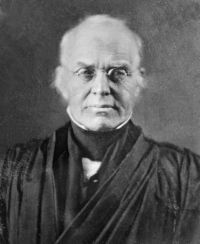
Portrait of Joseph Story Joseph Story Parsons v. Bedford — Opinion of the Court

We think not. No general words, purporting only to regulate the practice of a particular court, to conform its modes of proceeding to those prescribed by the state to its own courts, ought, in our judgment, to receive an interpretation which would create so important an alteration in the laws of the United States, securing the trial by jury. Especially ought it not to receive such an interpretation, when there is a power given to the inferior court itself to prevent any discrepancy between the state laws and the laws of the United States
Source: Wikisource

Portrait of Joseph Story Joseph Story Parsons v. Bedford — Opinion of the Court

A jury is often called to try matters of fact in a chancery case, and in the admission of evidence, the rules of the common law are observed. But does this make the principal proceeding an action at law? Surely not. And can the same mode of trial under the statute of Louisiana have that effect? The proceedings under this statute are as dissimilar to the common law process, as are the rules of chancery. The whole proceeding under the statute is in derogation of the common law.
Source: Wikisource

Portrait of Joseph Story Joseph Story Parsons v. Bedford — Opinion of the Court

The constitution had declared, in the third article, 'that the judicial power shall extend to all cases in law and equity arising under this constitution, the laws of the United States, and treaties made or which shall be made under their authority,' &c. and to all cases of admiralty and maritime jurisdiction. It is well known, that in civil causes, in courts of equity and admiralty, juries do not intervene, and that courts of equity use the trial by jury only in extraordinary cases to inform the conscience of the court.
Source: Wikisource

Get perspective with Kwize: daily news enlightened by great literature