Summary

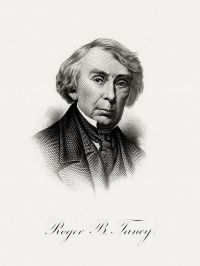
Portrait of Roger B. Taney Roger B. Taney United States v. Reid — Opinion of the Court

It would perhaps hardly be safe to lay down any general rule upon this subject. Unquestionably such evidence ought always to be received with great caution. But cases might arise in which it would be impossible to refuse them without violating the plainest principles of justice. It is however unnecessary to lay down any rule in this case, or examine the decisions referred to in the argument. Because we are of opinion that the facts proved by the jurors, if proved by unquestioned testimony, would be no ground for a new trial.
Source: Wikisource

Portrait of Roger B. Taney Roger B. Taney United States v. Reid — Opinion of the Court

But neither of these acts make any express provision concerning the mode of conducting the trial after the jury are sworn. They do not prescribe any rule by which it is to be conducted, nor the testimony by which the guilt or innocence of the party is to be determined. Yet, as the courts of the United States were then organized, and clothed with jurisdiction in criminal cases, it is obvious that some certain and established rule upon this subject was necessary to enable the courts to administer the criminal jurisprudence of the United States.
Source: Wikisource

Portrait of Roger B. Taney Roger B. Taney United States v. Reid — Opinion of the Court

The courts of the United States have uniformly acted upon this construction of these acts of Congress, and it has thus been sanctioned by a practice of sixty years. They refer undoubtedly to English works and English decisions. For the law of evidence in this country, like our other laws, being founded upon the ancient common law of England, the decisions of its courts show what is our own law upon the subject where it has not been changed by statute or usage.
Source: Wikisource

Get perspective with Kwize: daily news enlightened by great literature