Summary

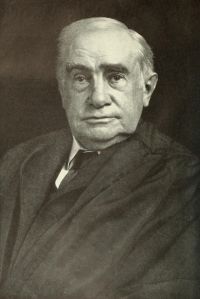
Portrait of Henry Billings Brown Henry Billings Brown Fitzpatrick v. United States — Opinion of the Court

While no inference of guilt can be drawn from his refusal to avail himself of the privilege of testifying, he has no right to set forth to the jury all the facts which tend in his favor without laying himself open to a cross-examination upon those facts. The witness having sworn to an alibi, it was perfectly competent for the government to cross-examine him as to every fact which had a bearing upon his whereabouts upon the night of the murder, and as to what he did and the persons with whom he associated that night.
Source: Wikisource

Portrait of Henry Billings Brown Henry Billings Brown Fitzpatrick v. United States — Opinion of the Court

It is clear, however, that, as § 5339 of the Revised Statutes inflicts the penalty of death for murder, the power given the jury by the act of January 15, 1897 (29 Stat. at L. 487, chap. 29) , to qualify the verdict of guilty by adding the words 'without capital punishment,' does not make the crime of murder anything less than a capital offense, or a conviction for murder anything less than a conviction for a capital crime, by reason of the fact that the punishment actually imposed is imprisonment for life.
Source: Wikisource

Portrait of Henry Billings Brown Henry Billings Brown Fitzpatrick v. United States — Opinion of the Court

As there was some evidence tending to show a joint action on the part of the three defendants, any fact having a tendency to connect them with the murder was competent upon the trial of Fitzpatrick. The true distinction is between statements made after the fact, which are competent only against the party making the statement, and facts connecting either party with the crime which are competent as a part of the whole transaction.
Source: Wikisource

Get perspective with Kwize: daily news enlightened by great literature