Summary

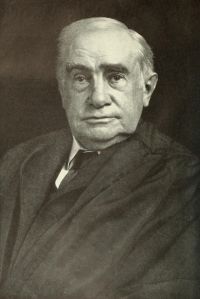
Portrait of Henry Billings Brown Henry Billings Brown Houston Texas Central Railroad Company v…

While railroad companies may be bound to furnish sufficient cars for their usual and ordinary traffic, cases will inevitably arise where, by reason of an unexpected turn in the market, a great public gathering, or an unforeseen rush of travel, a pressure upon the road for transportation facilities may arise, which good management and a desire to fulfil all its legal requirements cannot provide for, and against which the statute in question makes no allowance.
Source: Wikisource

Portrait of Henry Billings Brown Henry Billings Brown Houston Texas Central Railroad Company v…

That states may not burden instruments of interstate commerce, whether railways or telegraphs, by taxation, by forbidding the introduction into the state of articles of commerce generally recognized as lawful, or by prohibiting their sale after introduction, has been so frequently settled that a citation of authorities is unnecessary. Upon the other hand, the validity of local laws designed to protect passengers or employees, or persons crossing the railroad tracks, as well as other regulations intended for the public good, are generally recognized.
Source: Wikisource

Portrait of Henry Billings Brown Henry Billings Brown Houston Texas Central Railroad Company v…

While perhaps the road may have no right to complain of that portion of the statute which assumes to provide for its own protection, it is illustrative of its general spirit that, if the shipper does not fully load his cars within forty-eight hours after their arrival, he shall forfeit $25 for each car, or if the consignee shall fail to unload them within forty-eight hours after their delivery, at the place of consignment, which, in the case of interstate shipments, would be in another state, he shall also forfeit $25 per day for each car unloaded.
Source: Wikisource

Get perspective with Kwize: daily news enlightened by great literature