Summary

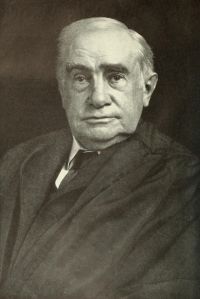
Portrait of Henry Billings Brown Henry Billings Brown Kehrer v. Stewart — Opinion of the Court

There could be no doubt whatever that, if the agent carried on his interstate and domestic business in two distinct establishments, one would be subject and the other would not be subject to the tax, and in our view it makes no difference that the two branches of business are carried on in the same establishment. The burden of proof was clearly upon the plaintiff to show that the domestic business was a mere incident to the interstate business.
Source: Wikisource

Portrait of Henry Billings Brown Henry Billings Brown Kehrer v. Stewart — Opinion of the Court

The power of taxation overrides any agreement of an employee to serve for a specific sum. His contract remains entirely undisturbed. There was no stipulation for an employment for a definite period; and if there were, it is inconceivable that the state should lose this right of taxation by the fact that the party taxed had entered into an engagement with his employer for a definite period. The tax is an incident to the business, and probably might, under the terms of their contract, be charged up against the employer as one of the necessary expenses of carrying it on.
Source: Wikisource

Portrait of Henry Billings Brown Henry Billings Brown Kehrer v. Stewart — Opinion of the Court

The act in question does not deny to the petitioner the equal protection of the laws, as the tax is imposed alike upon the managing agent both of domestic and of foreign houses. In its first opinion in this case the supreme court held that the tax was a vocation or occupation tax, and that it was not designed to apply to every agent or employee of the company, but only to the managing or superintending agent, who is the alter ego of the principal by whom he is employed.
Source: Wikisource

Get perspective with Kwize: daily news enlightened by great literature