Summary

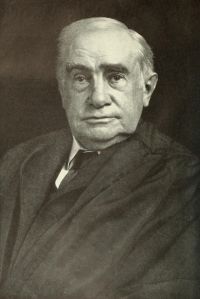
Portrait of Henry Billings Brown Henry Billings Brown Ledbetter v. United States — Opinion of the Court

We have no disposition to qualify what has already been frequently decided by this court, that where the crime is a statutory one it must be charged with precision and certainty, and every ingredient of which it is composed must be clearly and accurately set forth, and that even in the cases of misdemeanors the indictment must be free from all ambiguity, and leave no doubt in the minds of the accused and the court of the exact offense intended to be charged.
Source: Wikisource

Portrait of Henry Billings Brown Henry Billings Brown Ledbetter v. United States — Opinion of the Court

Good pleading undoubtedly requires an allegation that the offensew as committed on a particular day, month, and year, but it does not necessarily follow that the omission to state a particular day is fatal upon a motion in arrest of judgment. Neither is it necessary to prove that the offense was committed upon the day alleged, unless a particular day be made material by the statute creating the offense. Ordinarily, proof of any day before the finding of the indictment, and within the statute of limitations, will be sufficient.
Source: Wikisource

Portrait of Henry Billings Brown Henry Billings Brown Ledbetter v. United States — Opinion of the Court

Notwithstanding the cases above cited from our Reports, the general rule still holds good that upon an indictment for a statutory offense the offense may be described in the words of the statute, and it is for the defendant to show that greater particularity is required by reason of the omission from the statute of some element of the offense. Where the statute completely covers the offense, the indictment need not be made more complete by specifying particulars elsewhere obtained.
Source: Wikisource

Get perspective with Kwize: daily news enlightened by great literature