Summary

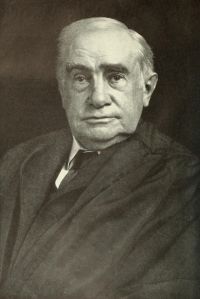
Portrait of Henry Billings Brown Henry Billings Brown Louisville Company v. Kentucky…

We think that the principle of these cases applies to the power of the legislature to forbid the consolidation of parallel or competing lines whenever, in its opinion, such consolidation is calculated to affect injuriously the public interests. Not only is the purchase of stock in another company beyond the power of a railroad corporation in the absence of an express stipulation in the charter, but the purchase of such stock in a rival and competing line is held to be contrary to public policy and void.
Source: Wikisource

Portrait of Henry Billings Brown Henry Billings Brown Louisville Company v. Kentucky…

The power to construct them involves necessarily the power to impose such regulations upon their operation as a sound regard for the interests of the public may seem to render desirable. In the division of authority with respect to interstate railways, congress reserves to itself the superior right to control their commerce, and forbid interference therewith; while to the states remains the power to create and to regulate the instruments of such commerce, so far as necessary to the conservation of the public interests.
Source: Wikisource

Get perspective with Kwize: daily news enlightened by great literature