Summary

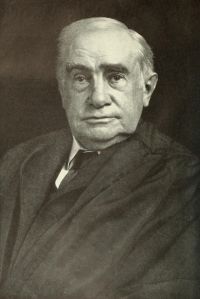
Portrait of Henry Billings Brown Henry Billings Brown Pearsall v. Great Northern Railway Company…

Nothing is to be taken as conceded but what is given in unmistakable terms, or by an implication equally clear. The affirmative must be shown. Silence is negation, and doubt is fatal to the claim. This doctrine is vital to the public welfare. It is axiomatic in the jurisprudence of this court.'
Hence an exclusive right to enjoy a certain franchise is never presumed, and, unless the charter contain words of exclusion, it is no impairment of the grant to permit another to do the same thing, although the value of the franchise to the first grantee may be wholly destroyed.
Source: Wikisource

Portrait of Henry Billings Brown Henry Billings Brown Pearsall v. Great Northern Railway Company…

Whether the consolidation of competing lines will necessarily result in an increase of rates, or whether such consolidation has generally resulted in a detriment to the public, is beside the question. Whether it has that effect or not, it certaintly puts it in the power of the consolidated corporation to give it that effect,-in short, puts the public at the mercy of the corporation. There is, and has been for the past 300 years, both in England and in this country, a popular prejudice against monopolies in general, which has found expression in innumerable acts of legislation.
Source: Wikisource

Portrait of Henry Billings Brown Henry Billings Brown Pearsall v. Great Northern Railway Company…

We cannot say that such prejudice is not well founded. It is a matter upon which the legislature is entitled to pass judgment. At least, there is sufficient doubt of the propriety of such monopolies to authorize the legislature, which may be presumed to represent the views of the public, to say that it will not tolerate them unless the power to establish them be conferred by clear and explicit language.
Source: Wikisource

Get perspective with Kwize: daily news enlightened by great literature