Summary

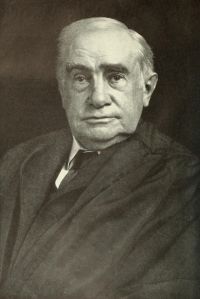
Portrait of Henry Billings Brown Henry Billings Brown Yazoo & Mississippi Valley Railroad Company v…

While we have never hesitated to vindicate the right of individuals or corporations to enforce the performance of lawful contracts as against subsequent legislation designed to impair them, we have always exacted as a condition that the contract was one which the legislature, or opposite party, had power to make under the Constitution, and that the other party was chargeable with knowledge of all its provisions in that connection.
Source: Wikisource

Portrait of Henry Billings Brown Henry Billings Brown Yazoo & Mississippi Valley Railroad Company v…

Justice Strong, 'such be the effect [consolidation or amalgamation] or not, must depend upon the statute under which the consolidation takes place, and of the intention therein manifested. If, in the statute, there be no words of grant of corporate powers, it is difficult to see how a new corporation is created.' It was held that the act did not work a dissolution of the existing corporations and the creation of a new company, since there was no provision for a surrender of the stock of the shareholders of the Central, and none for the issue of other certificates to them.
Source: Wikisource

Portrait of Henry Billings Brown Henry Billings Brown Yazoo & Mississippi Valley Railroad Company v…

In cases arising under the Mississippi Constitution of 1869, the method adopted in the charter of the Mobile & Northwestern Company, of commuting the taxes, was originally sustained under the theory that the provision of that Constitution declaring 'the property of all corporations for pecuniary profits shall be subject to taxation, the same as that of individuals,' did not mean that it should be necessarily subjected to taxation, but that it might be exempted altogether by the legislature.
Source: Wikisource

Get perspective with Kwize: daily news enlightened by great literature