Summary

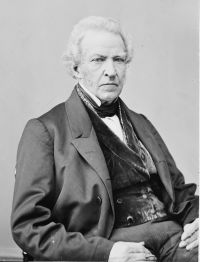
Portrait of James Moore Wayne James Moore Wayne Gordon v. Cheston — Opinion of the Court

When we speak of an act to be done by a bank or banks, we mean an act to be done by those who have the authority to do it. If it be an act within the franchise for banking, or the ordinary power of the bank to contract, and it is done by the president and directors, or by their agent, we say the bank did it, and every one understands what is meant. If, however, an act is to be done relative to the institution, by which its charter is to be in any way changed, the stockholders must do it, unless another mode to effect it has been provided by the charter.
Source: Wikisource

Portrait of James Moore Wayne James Moore Wayne Gordon v. Cheston — Opinion of the Court

As laid, it is nothing more than an income tax, and cannot a legislature lay that without regard to the source from which revenue comes? The distinction between a tax upon a bank, as such, and a tax upon its property, is clearly recognized in the case of McCulloch v. State of Maryland, where the court say that one may be taxed but not the other. The identity between a bank and its stockholders is shown not to exist, when we consider that the bank, as a corporation, could not become one of its own stockholders.
Source: Wikisource

Portrait of James Moore Wayne James Moore Wayne Gordon v. Cheston — Opinion of the Court

Such a contract is a limitation upon the taxing power of the legislature making it, and upon succeeding legislatures, to impose any further tax upon the franchise. But why, when bought, as it becomes property, may it not be taxed, as land is taxed which has been bought from the state, was repeatedly asked in the course of the argument? The reason is, that every one buys land, subject in his own apprehension to the great law of necessity, that we must contribute from it and all of our property something to maintain the state.
Source: Wikisource

Get perspective with Kwize: daily news enlightened by great literature