Summary

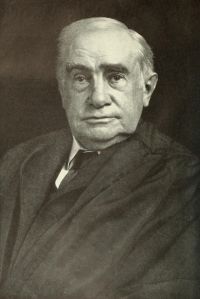
Portrait of Henry Billings Brown Henry Billings Brown Manigault v. Springs — Opinion of the Court

Although it was not an exercise of that power in its ordinarily accepted sense of protecting the health, lives, and morals of the community, it is defensible in its broader meaning of providing for the general welfare of the people by the reclamation of swampy, overflowed, and infertile lands, and the erection of dams, levees, and dikes for that purpose. We have often held that private interests are subservient to that right, except where property is taken for which compensation must be paid, and must give way to any general scheme for the reclamation or improvement of such lands.
Source: Wikisource

Portrait of Henry Billings Brown Henry Billings Brown Manigault v. Springs — Opinion of the Court

Admitting that, for the purposes of transit and travel, a river may be considered a highway,-and that seems to have been adjudged by the supreme court of South Carolina (Heyward v. Chisolm, 11 Rich. L. 253) ,-we think that, in connection with the words 'to lay out, open, alter, or work roads,' the word 'highway' is used in its ordinary sense, and as an equivalent to a public road. The power given by this section is evidently inapplicable to water highways, which are neither laid out, opened, altered, or worked in the ordinary sense of these words.
Source: Wikisource

Get perspective with Kwize: daily news enlightened by great literature