Summary

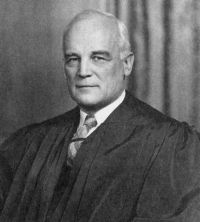
Portrait of Harold Hitz Burton Harold Hitz Burton United States v. Kansas City Life Insurance Company…

It is not the broad constitutional power to regulate commerce, but rather the servitude derived from that power and narrower in scope, that frees the Government from liability in these cases. When the Government exercises this servitude, it is exercising its paramount power in the interest of navigation, rather than taking the private property of anyone. The owner's use of property riparian to a navigable stream long has been limited by the right of the public to use the stream in the interest of navigation.
Source: Wikisource

Portrait of Harold Hitz Burton Harold Hitz Burton United States v. Kansas City Life Insurance Company…

If the United States may not do so, without such liability, we reach the other issue: Whether the resulting destruction of the agricultural value of the land affected, without actually overflowing it, is a taking of private property within the meaning of the Fifth Amendment to the Constitution of the United States. We decide both issues in favor of the respondent, the first in the negative, the second in the affirmative.
Source: Wikisource

Portrait of Harold Hitz Burton Harold Hitz Burton United States v. Kansas City Life Insurance Company…

The Government's dam raised the waters of the river which, in turn, raised those of the tributary across which Kelly had built a mill dam. This Court upheld the judgment requiring the United States to pay Kelly for the loss of his power head at his mill which resulted from this change in the level of the tributary. Similarly, in the Cress case itself, this Court assumed that a tributary of the Cumberland River was not navigable. It then allowed recovery for the destruction of the value of the land and of a ford across the tributary.
Source: Wikisource

Get perspective with Kwize: daily news enlightened by great literature