Summary

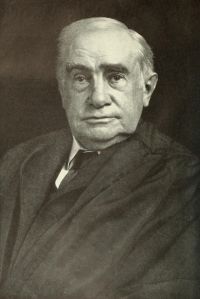
Portrait of Henry Billings Brown Henry Billings Brown Pickering v. Lomax — Opinion of the Court

Had the grantee, the day after the deed was delivered, sent it to Washington, and obtained the approval of the president, it would be sticking in the bark to say that the deed was not thereby validated. A delay of 13 years is immaterial, provided, of course, that no third parties have in the mean time legally acquired an interest in the lands.
Source: Wikisource

Portrait of Henry Billings Brown Henry Billings Brown Pickering v. Lomax — Opinion of the Court

St. § 709, our authority to riview final judgments or decrees of the highest courts of a state extends to all cases 'where is drawn in question the validity of a treaty or statute of, or an authority exercised under, the United States, and the decision is against their validity.' The argument of the defendant in this connection is that as the title to the lands did not pass by the treaty, which contained only an agreement to convey, the proviso ceased to be operative when the patent was issued in 1843
Source: Wikisource

Portrait of Henry Billings Brown Henry Billings Brown Pickering v. Lomax — Opinion of the Court

The object of the proviso was not to prevent the alienation of lands in toto, but to protect the Indian against the improvident disposition of his property, and it will be presumed that the president, before affixing his approval, satisfied himself that no fraud or imposition had been practiced upon the Indian when the deed was originally obtained.
Source: Wikisource

Get perspective with Kwize: daily news enlightened by great literature