Summary

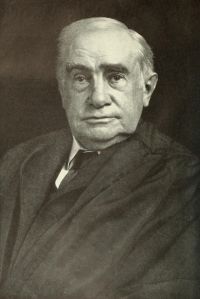
Portrait of Henry Billings Brown Henry Billings Brown Robertson v. Baldwin — Opinion of the Court

Indeed, the business of navigation could scarcely be carried on without some guaranty, beyond the ordinary civil remedies upon contract, that the sailor will not desert the ship at a critical moment, or leave her at some place where seamen are impossible to be obtained,-as Molloy forcibly expresses it, 'to rot in her neglected brine.' Such desertion might involve a long delay of the vessel while the master is seeking another crew, an abandonment of the voyage, and, in some cases, the safety of the ship itself.
Source: Wikisource

Portrait of Henry Billings Brown Henry Billings Brown Robertson v. Baldwin — Opinion of the Court

At the same time discipline is more stringently enforced by additional punishments for desertion, absence without leave, disobedience, insubordination, and barratry. Indeed, seamen are treated by congress, as well as by the parliament of Great Britain, as deficient in that full and intelligent responsibility for their acts which is accredited to ordinary adults, and as needing the protection of the law in the same sense in which minors and wards are entitled to the protection of their parents and guardians.
Source: Wikisource

Portrait of Henry Billings Brown Henry Billings Brown Robertson v. Baldwin — Opinion of the Court

We think the power of justices of the peace to arrest deserting seamen and deliver them on board their vessel is not within the definition of the 'judicial power' as defined by the constitution, and may be lawfully conferred upon state officers. That the authority is a most convenient one to intrust to such officers cannot be denied, as seamen frequently leave their vessels in small places, where there are no federal judicial officers, and where a justice of the peace may usually be found, with authority to issue warrants under the state laws.
Source: Wikisource

Get perspective with Kwize: daily news enlightened by great literature