Summary

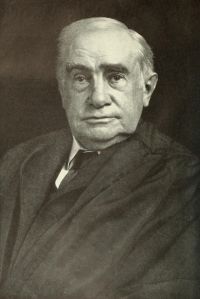
Portrait of Henry Billings Brown Henry Billings Brown Smith v. Indiana — Opinion of the Court

We think the interest of an appellant in this court should be a personal, and not an official, interest, and that the defendant, having sought the advice of the courts of his own state in his official capacity, should be content to abide by their decision.
It is true there seems to have been a personal judgment in form against the defendant for costs, the amount of which, however, has never been taxed, and when taxed and paid would probably be reimbursed to him.
Source: Wikisource

Portrait of Henry Billings Brown Henry Billings Brown Smith v. Indiana — Opinion of the Court

The fact that the various statutes fixing the jurisdiction of the circuit court of the United States, and of this court, which, from the original judiciary act of 1789 [1 Stat. at L. 73, chap. 20] have, where the amount involved was made the test of jurisdiction, uniformly used the words 'exclusive of costs,' would indicate, so far as the Federal courts are concerned, that a mere judgment for costs could not ordinarily be made the basis of an appeal to this court.
Source: Wikisource

Portrait of Henry Billings Brown Henry Billings Brown Smith v. Indiana — Opinion of the Court

The constitutionality of the exemption law of Indiana was apparently the only question raised by the parties. It was argued elaborately, both in the circuit and supreme court of the state, and was finally affirmed by a majority of the latter court. The power of the county auditor, who is charged by law with the duty of making the assessment, to refuse to allow the relators their exemption upon the ground of the unconstitutionality of the act, does not appear to have been raised in the state courts, and is not noticed in either opinion of the supreme court.
Source: Wikisource

Get perspective with Kwize: daily news enlightened by great literature