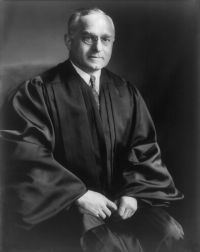
 Felix Frankfurter,
Feldman v. United States — Opinion of the Court
Felix Frankfurter,
Feldman v. United States — Opinion of the Court
“ 'The ultimate touchstone of constitutionality is the Constitution itself and not what we have said about it.' Graves v. ”
Constitutionality refers to the conformity of laws, actions, or institutions with the principles of a constitution. This concept has been examined by figures such as Joseph Story, who stressed the Constitution’s supremacy as a “supreme law” for the people, and Oliver Wendell Holmes, Jr., who emphasized judicial clarity in evaluating legal measures.
Felix Frankfurter portrayed the Constitution itself as the ultimate benchmark, while Alexander Hamilton advocated for the sovereign character of governmental powers. These viewpoints together illustrate constitutionality as a flexible framework that balances legal precision with the changing demands of society.
Felix Frankfurter,
Feldman v. United States — Opinion of the Court
“ 'The ultimate touchstone of constitutionality is the Constitution itself and not what we have said about it.' Graves v. ”
Jonathan Elliot, Debates in the Several State Conventions on the Adoption of the Federal Constitution (1907)
“ If it be understood that the powers implied in the specified powers have an immediate and appropriate relation to them, as means necessary and proper for carrying them into execution, questions on constitutionality of laws passed for this purpose will be of a nature sufficiently precise and determinate for judicial cognizance and control. ”
Oliver Wendell Holmes, Jr., United States v. Wurzbach — Opinion of the Court
“ The elaborate argument against the constitutionality of the Act if interpreted as we read it, in accordance with its obvious meaning does not need an elaborate answer. ”
Alexander Hamilton, On the constitutionality of a national bank (1791)
“ namely, that every power, vested in a government, is in its nature SOVEREIGN, and includes by force of the term, a right to employ all the means requisite, and fairly applicable, to the attainment of the ends of such power and which are not precluded by restrictions and exceptions specified in the constitution or not immoral; ”
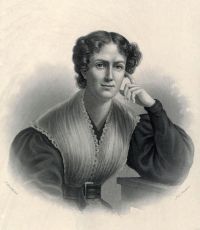 Frances Wright,
Independence Day speech at New Harmony
Frances Wright,
Independence Day speech at New Harmony
“ The clear-sighted provision in the national constitution, as in the constitutions of the different states, by which the frame of government can be moulded at will by the public voice, and so made to keep pace in progress with the public mind, is the master-stroke in constitutional law. ”
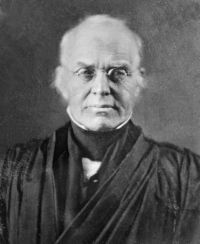 Joseph Story,
Commentaries on the Constitution of the United States
(1833)
Joseph Story,
Commentaries on the Constitution of the United States
(1833)
“ A state constitution is then in a just and appropriate sense, not only a law, but a supreme law, for the government of the whole people, within the range of the powers actually contemplated, and the rights secured by it. ”
Joseph Story,
Commentaries on the Constitution of the United States
(1833)
“ But a constitution of government, founded by the people for themselves and their posterity, and for objects of the most momentous nature, for perpetual union, for the establishment of justice, for the general welfare, and for a perpetuation of the blessings of liberty, necessarily requires, that every interpretation of its powers should have a constant reference to these objects. No interpretation of the words, in which those powers are granted, can be a sound one, which narrows down their ordinary import, so as to defeat those objects. ”
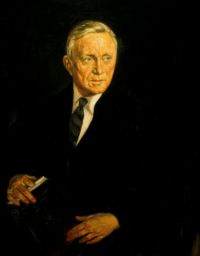 William O. Douglas,
..? — Concurrence
William O. Douglas,
..? — Concurrence
“ For it misses the whole point of our constitutional history to assume that 'government,' or any branch of government, somehow has rights and powers of its own apart from those necessarily attending the proper performance of its constitutional functions. ”
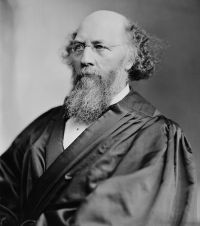 Stephen Johnson Field,
Beckwith v. Bean/Dissent Johnson Field…
Stephen Johnson Field,
Beckwith v. Bean/Dissent Johnson Field…
“ To me, therefore, it is a marvel that in this country, under a Constitution ordained by men who were conversant with the principles of Magna Charta, and claimed them as their birthright, a Constitution which declares in its preamble that it is established 'to secure the blessings of liberty to ourselves and posterity,'-it could ever be contended that an order of the Executive, issued at his will for the arrest and imprisonment of a citizen, where the courts are open and in the full exercise of their jurisdiction, is due process of law, or could ever be made such by an act of Congress. ”
Felix Frankfurter,
Knapp v. Schweitzer — Opinion of the Court
“ It is relevant to remind that our Constitution is one of particular powers given to the National Government with the powers not so delegated reserved to the States or, in the case of limitations upon both governments, to the people. ”
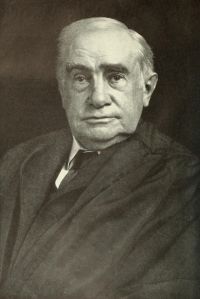 Henry Billings Brown,
Davis v. Burke — Opinion of the Court
Henry Billings Brown,
Davis v. Burke — Opinion of the Court
“ But where a constitution asserts a certain right, or lays down a certain principle of law or procedure, it speaks for the entire people as their supreme law, and is full authority for all that is done in pursuance of its provision. ”
United States. Congress, Abridgment of the Debates of Congress…
“ But there is another objection to the repeal of the judiciary law, which in my mind is conclusive: I mean the letter and spirit of the constitution.In the formation of every Government, in which the people have a share in its administration, some established and indisputable principles must be adopted. In our Government, the formation of a Legislative, Executive, and Judiciary power, is one of the incontrovertible principles; and that each should be independent of the other, so far as human frailty will permit, is equally incontrovertible. ”
William F. Russell, The Short Constitution
“ Article III of the Constitution provides for courts and judges, and fixes their jurisdiction—their power—and gives direction as to trial and penalty in certain cases. Thus we find that the Constitution guarantees a National government (a republican form of government) , confers certain powers formerly held by the people, provides an executive to enforce the powers granted, a legislative body to make laws under which the powers may be exercised, and establishes [pg 185] courts to construe and apply the laws enacted, to the end that human rights and liberties shall be protected. ”
 Johann Gottlieb Fichte,
The Science of Rights — Book Second Concerning the State Constitution
(1889)
Johann Gottlieb Fichte,
The Science of Rights — Book Second Concerning the State Constitution
(1889)
“ Even in our mere general form of government, a combination of President, Congress, and the Supreme Court is out of the question. How, then, could the governments of all the states combine to suppress the whole people?—Translator's remark. ”
George Ticknor Curtis, History of the Origin, Formation…
“ The advocates of a national government, besides and beyond the intrusting of a particular jurisdiction to that government, wished to make it certain that its legislative power, in each act of legislation, should rest on the direct authority of the people. ”
Various, The Continental Monthly, Vol. 6…
“ Therefore it is that the question, in reference to any measure, Is it constitutional? far from exciting ridicule, as sometimes with superficial thinkers it has done, is to be recognized as proof of our magnificent control over the wayward factions of the hour, and of our abiding trust in the hardly less than inspired wisdom of our fathers, to which we thus make our ultimate appeal. For the Constitution is the organic law of the nation, and stands for the firm foundation of our national life. ”
 John Taylor of Caroline,
Tyranny Unmasked — Section III
(1821)
John Taylor of Caroline,
Tyranny Unmasked — Section III
(1821)
“ Is it not possible that a patriotick Congress may also appear, which will, by a similar declaration proclaim the constitutional rights of the States in which they live, and of the people to whom they must return? ”
 Hugo Black,
Afroyim v. Rusk — Opinion of the Court
Hugo Black,
Afroyim v. Rusk — Opinion of the Court
“ Our Constitution governs us and we must never forget that our Constitution limits the Government to those powers specifically granted or those that are necessary and proper to carry out the specifically granted ones. ”
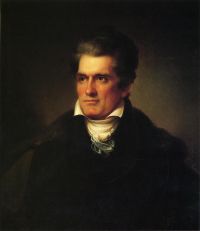 John C. Calhoun,
Against the Force Bill
John C. Calhoun,
Against the Force Bill
“ No candid man can dispute that I have given a correct description of the constitution-making power: that power which created and organized the Government, which delegated to it, as a common agent, certain powers, in trust for the common good of all the States, and which imposed strict limitations and checks against abuses and usurpations. ”
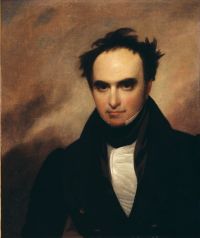 Daniel Webster,
The Great Speeches and Orations of Daniel Webster
(1879)
Daniel Webster,
The Great Speeches and Orations of Daniel Webster
(1879)
“ But, Sir, the people have wisely provided, in the Constitution itself, a proper, suitable mode and tribunal for settling questions of constitutional law. There are in the Constitution grants of powers to Congress, and restrictions on these powers. ”
George Nicholas, A Letter from George Nicholas of Kentucky to His Friend in Virginia (1798)
“ This transfer then of constitutional powers, from the whole to a part, of from the part to which they are given by the constitution, to a part to which they are not given; is as dangerous to liberty, as an assumption by the whole of the government, of more power than is given to it by the constitution: because the division of the power which is given, is as effectual as its limitation, to the preservation of liberty. ”
William F. Russell, The Short Constitution
“ By their Constitution the people of a State proclaim and establish their power superior to the power of the legislature of the State or any officer of the State. The power expressed in the Constitution is the power of the people. They have, by their solemn document—the Constitution—established certain rules, regulations, principles, and guaranties, which cannot be changed by ordinary legislation.105 Of course the people can change and modify the Constitution of State or Nation. Every Constitution provides some method of amendment. ”
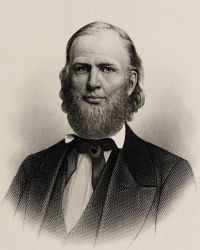 Byron Paine,
Unconstitutionality of the Fugitive Act
(1854)
Byron Paine,
Unconstitutionality of the Fugitive Act
(1854)
“ The language of the Constitution is so peculiar, that the distinction between power to be conferred upon the Government about to be created, and covenants entered into between the parties, as States is obvious at a glance. ”
Various, The Continental Monthly, Vol. 2…
“ The Constitution—bear that word well in mind—the Constitution which suffers no State to usurp a single power belonging to the General Government, and which was expressly framed for the purpose of making all its freemen the citizens of one great nation. ”
Jonathan Elliot, Debates in the Several State Conventions on the Adoption of the Federal Constitution (1907)
“ The people had a right to prohibit to the states the exercise of any powers which were, in their judgment, incompatible with the objects of the general compact; to make the powers of the state governments, in given cases, subordinate to those of the nation ”
George Ticknor Curtis, Life of James Buchanan, Fifteenth President of the United States…
“ This Government can, by the Constitution of the country, and by the laws enacted in conformity with the Constitution, operate upon individuals, and has the right and the power, not to coerce a State, but to enforce and execute the law upon individuals within the limits of a State. ”
Daniel Webster,
Select Speeches of Daniel Webster…
“ They all exercise it from necessity, and as a consequence of the exercise of other powers. The State governments themselves possess it, except in that class of questions which may arise between them and the general government, and in regard to which they have surrendered it, as well by the nature of the case as by clear constitutional provisions. In other and ordinary cases, whether a particular law be in conformity to the constitution of the State is a question which the State legislature or the State judiciary must determine. ”
Jonathan Elliot, Debates in the Several State Conventions on the Adoption of the Federal Constitution (1907)
“ Our Constitution does not contain the absurdity of giving power to make laws, and another power to resist them. The sages, whose memory will always be reverenced, have given us a practical, and, as they hoped, a permanent constitutional compact. ”
Joseph Story,
Commentaries on the Constitution of the United States
(1833)
“ If the constitution defines the powers of the government, and points out the mode of changing them; and yet, the instrument is to expand in the hands of one set of rulers, and to contract in those of another, where is the standard? If the will of the people is to govern in the construction of the powers of the constitution, and that will is to be gathered at every successive election at the polls, and not from their deliberate judgment, and solemn acts in ratifying the constitution, or in amending it, what certainty can there be in those powers? ”
Joseph Story,
Commentaries on the Constitution of the United States
(1833)
“ With a view, therefore, to preserve the rights and liberties of the people against unjust encroachments, and to secure the equal benefits of a free constitution, it is of vital importance to interpose some check against the undue exercise of the legislative power, which in every government is the predominating, and almost irresistible power. ”
Jonathan Elliot, Debates in the Several State Conventions on the Adoption of the Federal Constitution (1907)
“ The limited and well-defined powers under which we acted, and which could not, on any possible construction, embrace an idea of such magnitude as to assent to a general Constitution, in subversion of that, of the state. ”
Joseph Story,
Commentaries on the Constitution of the United States
(1833)
“ In laws, we are obliged to act without ourselves determining, or promising any thing at all." [41] It is a rule prescribed; that is, it is laid down, promulgated, and established. It is prescribed by the supreme power in a state, that is, among us, by the people, or a majority of them in their original sovereign capacity. Like the ordinary municipal laws, it may be founded upon our consent, or that of our representatives; but it derives its ultimate obligatory force, as a law, and not as a compact. ”
John C. Calhoun,
Works of John C. Calhoun
(1854)
“ As far as they are concerned, the State, as a party to the constitutional compact, has the right to decide, in the last resort — and, acting in the same character in which it ratified the constitution, to determine to what limits its powers extend, and how far they are bound to respect and obey it, and the acts made under its authority. ”
Joseph Story,
Commentaries on the Constitution of the United States
(1833)
“ That in a government, like ours, founded by the people, and managed by the people, and especially in one of limited authority, there was no necessity of any bill of rights; for all powers not granted were reserved ”
Daniel Webster,
The Great Speeches and Orations of Daniel Webster
“ And, finally, another most important part of the great fabric of American liberty is, that there shall be written constitutions, founded on the immediate authority of the people themselves, and regulating and restraining all the powers conferred upon government, whether legislative, executive, or judicial. ”
Alpheus Henry Snow, "Colony,"--or "Free State"? "Dependence…
“ At the present time the doctrine of the Supreme Court, and therefore of the Government, is that all acts of the American Government in the annexed insular, transmarine and transterranean regions, are acts of absolute power, when directed toward communities, though tempered by "fundamental principles formulated in the Constitution" or by "the applicable provisions of the Constitution," when directed toward individuals. ”
John Quincy Adams, State of the Union Addresses of John Quincy Adams
“ The Constitution under which you are assembled is a charter of limited powers. After full and solemn deliberation upon all or any of the objects which, urged by an irresistible sense of my own duty, I have recommended to your attention should you come to the conclusion that, however desirable in themselves, the enactment of laws for effecting them would transcend the powers committed to you by that venerable instrument which we are all bound to support, let no consideration induce you to assume the exercise of powers not granted to you by the people. ”
Joseph Story,
Commentaries on the Constitution of the United States
(1833)
“ And what is equally strong, no one, in or out of the state conventions, at the time when the constitution was put upon its deliverance before the people, ever dreamed of, or suggested, that it contained a restriction of power. ”
Joseph Story,
Martin v. Hunter's Lessee — Opinion of the Court
“ In legislating on this subject, congress, in the true spirit of the constitution, have proposed to secure to every one the full benefit of the constitution, without forcing any one necessarily into the courts of the United States. ”
Oliver Wendell Holmes, Jr., Rippey v. Texas — Opinion of the Court
“ The question for us is whether, if the state Constitution undertakes to authorize such a law, it encounters the Constitution of the United States. It is a question of the power of the state as a whole. ”
J. Allen Smith, The Spirit of American Government
“ The judiciary has thus claimed not only the power to act as the final interpreter of the Constitution, but also the right, independently of the Constitution, to interpret the political system under which we live, and make all legislative acts conform to its interpretation of that system. ”
Horace Gray, Brown v. Walker/Dissent Gray — Dissent
“ Each state established a constitution for itself, and, in that constitution, provided such limitations and restrictions on the powers of its particular government as its judgment dictated. The people of the United States framed such a government for the United States as they supposed best adapted to their situation and best calculated to promote their interests. ”
Joseph Story,
Commentaries on the Constitution of the United States
(1833)
“ It is indispensably necessary to good government, and rendered essential by the English constitution, that the constituent branches of the legislature be independent of each other; that, therefore, the exercise of legislative pou er in several colonies, by a council appointed, during pleasure, by the crown, is unconstitutional, dangerous, and destructive to the freedom of American legislation. ”
Hugo Black,
In re Winship — Dissent
“ Our Federal Government was set up as one of limited powers, but it was also given broad power to do all that was 'necessary and proper' to carry out its basic purpose of governing the Nation, so long as those powers were not exercised contrary to the limitations set forth in the Constitution. ”
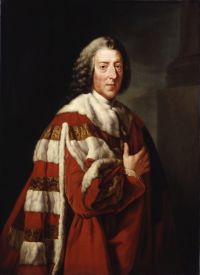 William Pitt, 1st Earl of Chatham,
The case of John Wilkes
(1770)
William Pitt, 1st Earl of Chatham,
The case of John Wilkes
(1770)
“ We all know what the Constitution is. We all know that the first principle of it is, that the subject shall not be governed by the arbitrium of any one man or body of men - less than the whole Legislature, but by certain laws, to which he has virtually given his consent, which are open to him to examine, and not beyond his ability to understand. ”
