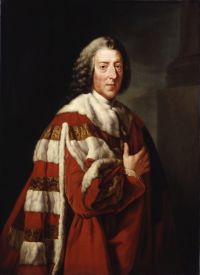
William Pitt, 1st Earl of Chatham

William Pitt, 1st Earl of Chatham

Summary

Portrait of William Pitt, 1st Earl of Chatham William Pitt, 1st Earl of Chatham The case of John Wilkes (1770)

No man respects the House of Commons more than I do, or would contend more strenuously than I would to preserve to them their just and legal authority. Within the bounds prescribed by the Constitution, that authority is necessary to the well-being of the people. Beyond that line, every exertion of power is arbitrary, is illegal; it threatens tyranny to the people, and destruction to the state. Power without right is the most odious and detestable object that can be offered to the human imagination.
Source: Wikisource

Portrait of William Pitt, 1st Earl of Chatham William Pitt, 1st Earl of Chatham The case of John Wilkes (1770)

Are all the generous efforts of our ancestors, are all those glorious contentions, by which they meant to secure to themselves, and to transmit to their posterity, a known law, a certain rule of living, reduced to this conclusion, that instead of the arbitrary power of a King, we must submit to the arbitrary power of a House of Commons?
Source: Wikisource

Portrait of William Pitt, 1st Earl of Chatham William Pitt, 1st Earl of Chatham The case of John Wilkes (1770)

MY LORDS, There is one plain maxim, to which I have invariably adhered through life: that in every question in which my liberty or my property were concerned, I should consult and be determined by the dictates of common sense. I confess, my Lords, that I am apt to distrust the refinements of learning, because I have seen the ablest and the most learned men equally liable to deceive themselves and to mislead others.
Source: Wikisource

Get perspective with Kwize: daily news enlightened by great literature