Summary

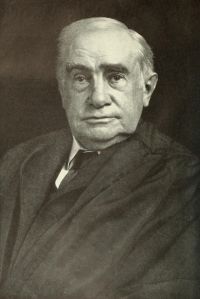
Portrait of Henry Billings Brown Henry Billings Brown United States v. Cornell Steamboat Company…

The jurisdiction which the court exercises in salvage cases is of a peculiarly equitable character. The right to salvage may arise out of an actual contract, but it does not necessarily do so. It is a legal liability arising out of the fact that property has been saved; that the owner of the property, who has had the benefit of it, shall make remuneration to those who have conferred the benefit upon him, notwithstanding that he has not entered into any contract on the subject.
Source: Wikisource

Portrait of Henry Billings Brown Henry Billings Brown United States v. Cornell Steamboat Company…

A claim for salvage may undoubtedly be founded upon an express contract, but where the services are rendered, as in this case, without request of an officer of the government, and particularly where they are incidental to services rendered in the saving of private property, we do not think the claim can be said to arise upon any contract, express or implied, with the government of the United States.
Source: Wikisource

Portrait of Henry Billings Brown Henry Billings Brown United States v. Cornell Steamboat Company…

The fact, however, that the property saved is not within the physical possession of the court, but is of an intangible nature, like freight or customs dues, does not prevent the maintenance of a libel in personam against the owner. Indeed, general admiralty rule No. 19 provides that 'in all suits for salvage the suit may be in rem . . . or in personam against the party at whose request, and for whose benefit, the salvage services have been performed.' In the case of freight the practice is to require its payment into court.
Source: Wikisource

Get perspective with Kwize: daily news enlightened by great literature