Summary

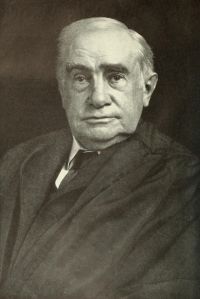
Portrait of Henry Billings Brown Henry Billings Brown United States v. New York (173 U.S. 464…

But this court did not hold that, where the court of claims was satisfied that the evidence before it fully established a fact, it was bound to insert all the evidence upon that point, if the losing party thought the court made a mistake. This court has repeatedly held that the findings of the court of claims in an action at law determine all matters of fact, like the verdict of a jury, and that where there is any evidence of a fact which they find, and no exception is taken, their finding is final.
Source: Wikisource

Portrait of Henry Billings Brown Henry Billings Brown United States v. New York (173 U.S. 464…

The second article of the treaty indicates that the grant was made upon the basis of 320 acres for each inhabitant; the recital, being '320 acres for each soul of said Indians, as their numbers are at present computed.' But the grant was not of 320 acres for each soul, but of a tract of land en bloc. Under the decision of the court a present title thereto passed to the Indians. This being the case, the United States are in no position to show that the government erred in its computation of souls, or that certain tribes who are named in the treaty did not assent to it.
Source: Wikisource

Portrait of Henry Billings Brown Henry Billings Brown United States v. New York (173 U.S. 464…

If the land passed under the treaty, then it is only a question between the Indians themselves who were signatories thereto or assented to its terms. The only object of the proposed order, though it is but faintly outlined in the briefs, must be to show that if the Stockbridges, Munsees, and Brothertowns never assented to the treaty, the grant should be reduced in the proportion of 320 acres to each member of these tribes.
Source: Wikisource

Get perspective with Kwize: daily news enlightened by great literature