Summary

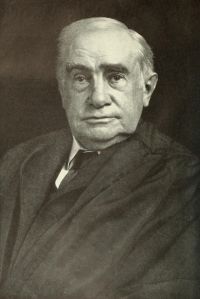
Portrait of Henry Billings Brown Henry Billings Brown New York Indians v. United States…

There is no doubt that the cession by the Indians of their interest in the Wisconsin lands, in the first article of the treaty, was an absolute, unconditional, and immediate grant; and it is improbable that the Indians would have consented, or that the United States would desire, that they should accept from the government a mere promise to set apart for them in the future the tract in Kansas.
Source: Wikisource

Portrait of Henry Billings Brown Henry Billings Brown New York Indians v. United States…

It may be said that the provisos in this act applied only to the Indians in said territory, but, even if it be so limited, the provision in the act of March 3, 1859, clearly applies only to the New York Indians, whose rights under the treaty were recognized. Up to the time these acts were passed, certainly, there had been no denial of the right of the Indians to these lands, and no action on the part of the government indicating an intent to insist upon the forfeiture of such right. Every legislative expression tended towards an acknowledgment of the fact that their claim was unimpaired.
Source: Wikisource

Portrait of Henry Billings Brown Henry Billings Brown New York Indians v. United States…

There is something, too, which shocks the conscience, in the idea that a treaty can be put forth as embodying the terms of an arrangement with a foreign power or an Indian tribe, a material provision of which is unknown to one of the contracting parties, and is kept in the background, to be used by the other only when the exigencies of a particular case may demand it.
Source: Wikisource

Get perspective with Kwize: daily news enlightened by great literature