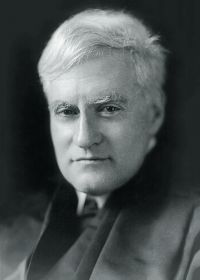
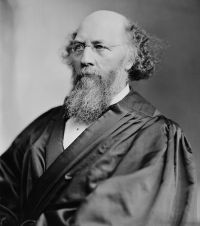
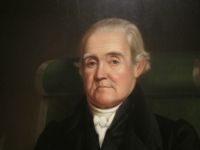
Appropriation, stemming from the Latin appropriare, refers to the legal assignment of resources—especially funds—to defined purposes, typically regulated by legislative or constitutional structures. This idea is prevalent in legal and political systems, ranging from the U.S. appropriations process to ecclesiastical and property law. Writers such as Philip Pendleton Barbour described it as a legal act of "setting apart the thing for some particular use," while Sir William Blackstone associated it with the termination of corporate entities.
Thomas Hill Green examined its philosophical foundations, highlighting appropriation as an extension of personal identity beyond property. At the same time, Thurgood Marshall emphasized its significance in property rights, pointing out that physical occupation represents a "serious form of invasion." These differing viewpoints illustrate appropriation’s function as both a practical tool of governance and a debated concept in law and ethics.
 Philip Pendleton Barbour,
Wilcox v. Jackson — Opinion of the Court
Philip Pendleton Barbour,
Wilcox v. Jackson — Opinion of the Court