“ The artists of the fifteenth and sixteenth centuries are notorious for the extreme and elaborate minuteness of their painting of jewels. In the portraits of the time careful accuracy in depicting ornaments was the duty, and evidently the delight, of the painter. In every early picture the various details of costume and jewellery are rendered with scrupulous care and refinement. Though placed in the most prominent and decorative positions, jewellery was never, in the best works, allowed to intrude or to occupy an exaggerated place in the composition. ”
Jewellery
Definition and stakes
Jewellery, comprising decorative items worn for adornment or symbolic meaning, has transformed from practical objects into indicators of status and artistry. H. Clifford Smith emphasizes its precise depiction in Renaissance portraiture and its resurgence as an artistic pursuit, while Émile Zola portrays it as a symbol of beauty that surpasses material worth.
George Routledge highlights its function in etiquette, differentiating between authentic gems and imitations. Throughout cultures and historical periods, jewellery reflects both individual identity and societal values, merging craftsmanship with cultural importance. Its lasting allure stems from its capacity to unite aesthetic creativity with symbolic depth.
Quotes about “jewellery”
“ Side by side with the improvement in taste which during the last few years has prompted people to preserve old jewellery, and a genuine love for its peculiar and indefinable attractions which has induced them to collect it, the present age has witnessed a truly remarkable revival in the artistic production of articles of personal ornament. The general awakening that has taken place in the industrial arts has nowhere made its influence more strongly felt than in respect to jewellery. ”

“ Each little girl that was born found in her cradle her necklets, her bracelets, and her rings, even as the little ones of former days had found their toys. But jewellery now had no value, gold had simply become so much beauty. ”
“ It is not so much a particular character of its own that has marked the jewellery of each epoch of the century, as a peculiar form of reproduction or rather reconstruction of older styles of art, based for the most part on false traditions. The whole period was an eclectic one, and the majority of its productions—the result of nothing less than aimless hesitation and fruitless endeavour to revive the forms of the past—display at least doubtful taste. ”
“ Jewellery is not only worn with the purpose of attracting attention and setting off the beauty of the person, but satisfies the desire, not less deep-rooted in humanity, of establishing a distinctive mark of rank and dignity. In fact the wearing of certain kinds of ornaments has at times been fixed by legislation. ”
George Routledge, Routledge's Manual of Etiquette
“ Let your jewellery be always the best of its kind. Nothing is so vulgar, either in youth or age, as the use of false ornaments.There is as much propriety to be observed in the wearing of jewellery as in the wearing of dresses. Diamonds, pearls, rubies, and all transparent precious stones belong to evening dress, and should on no account be worn before dinner. In the morning let your rings be of the more simple and massive kind; wear no bracelets; and limit your jewellery to a good brooch, gold chain, and watch. ”
George Routledge, Routledge's Manual of Etiquette
“ Jewellery is another accessory. Jewels, real jewels, are in the possession of only a few. They are so costly that only millionaires or the heirs of heirlooms can have them. They are very beautiful, and have this one merit, that a few jewels, judiciously selected and worn, make a person well dressed at once. A diamond necklace and brooch, diamond earrings, and a few diamond stars glittering in the hair, will make almost a shabby dress pass muster at Court. But jewellery is a term that is applied to ornaments generally, and not to jewels only.Sham jewellery is an abomination. ”
J. H. Middleton, Illuminated manuscripts in classical and mediaeval times…
“ Copies of jewellery.One class of ornament in the Book of Kells and in other manuscripts of this class consists of bands or diapers formed with step-like lines enclosing small spaces of brilliant colour. It is this class of pattern which is derived from the cloisonné inlay with bits of transparent carbuncle used in gold jewellery. Other ornaments consist of various spiral forms derived from the application of gold wire to flat surfaces of gold, a class of pattern which appears to have come, as it were, naturally to the gold-workers of many different periods and countries. ”
“ The bright blending of beautiful colours had to give way to strong shadows and skilful effects of perspective. There exists, on the other hand, an abundance of material in the form of actual specimens of Cinquecento jewellery, but owing to the far-reaching influence of the Renaissance style of ornament a decision as to their precise provenance is a matter of the utmost difficulty. ”
active 1803-1825 William Bennet Stevenson, Historical and descriptive narrative of twenty years' residence in South America…
“ Jewellery is much worn by the ladies, of which many have a large stock, principally consisting of ear-rings, necklaces, rosaries, amulets, and bracelets of diamonds, emeralds, topazes, or other precious gems, in complete sets, for a mixture is considered a proof of poverty. ”
“ Very attractive and valuable guides to the jewellery of the early period are the early Flemish-Burgundian paintings (p. 90) , and those of the Italian masters of the fifteenth century (p. 167) . The most fertile of sixteenth-century pictures for the present purpose are the German (p. 189) , as may be judged from Herr Luthmer's Goldschmuck der Renaissance, in which are reproduced in colours a number of specimens of jewellery figured in contemporary pictures. ”
C. J. Wills, In the land of the lion and sun… (1891)
“ On state occasions, or with women who aim at beauty, the face is always painted more or less, and a profusion of jewellery worn. This is of the most solid description, the gold some twenty-three carats fine, and quite flexible: no hollow jewellery is worn, intrinsic value being what is aimed at. ”
 Carl Van Vechten,
Peter Whiffle
(1922)
Carl Van Vechten,
Peter Whiffle
(1922)
“ Jewellery catalogues: heaps of 'em, all about diamonds and platinum, chrysoprase and jade, malachite and chalcedony, amethysts and garnets, and the emerald, the precious stone which comes the nearest to approximating that human manifestation known as art, because it always has flaws; red jasper, sacred to the rosy god, Bacchus, the green plasma, blood-stone, cornelian, cat's-eye, amber, with its medicinal properties, the Indian jewels, spinels, the reddish orange jacinth, and the violet almandine. ”
Henry Noel Humphreys, Once a Week (1863)
“ Silver jewellery of Etruscan workmanship is much more rare than gold, and on this account a beautiful silver necklace in the Campana museum is more prized than some of the far richer examples in gold. ”
“ Except for slight changes in design, eighteenth-century jewellery, as far as its general form is concerned, does not at first display any marked variation from that of the previous century. A charming but somewhat superficial sentimentality expressed by means of pastoral subjects results in ornaments on which tokens of friendship are represented in all manner of forms. The naturalistic tendency in ornament is still strong, but is less striking than it was before, since feather, ribbon, and other conventional designs make their appearance, mingled with flowers and leaves. ”
“ Partly for this reason it is less easy than it was with the jewellery of the century previous to notify extant examples of all species of ornaments. Their main features, already described, lie in a preference for precious stones, and for a style of ornament which, at first formal, evolves into naturalistic flower designs in painted enamel.Widespread luxury accompanied the large importation of precious stones. Ladies made each new fête a pretext for greater extravagance and greater efforts to outshine their neighbours ”
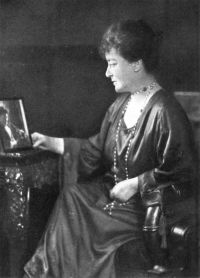 Eliza Davis Aria,
Costume: Fanciful, Historical, and Theatrical
(1906)
Eliza Davis Aria,
Costume: Fanciful, Historical, and Theatrical
(1906)
“ All the jewellery common to the district is exceptionally massive and set with red or green stones, the pendent ear-rings of gold or silver being so heavy that they have to be supported by cords, lest they should tear the flesh. ”
“ The real difficulty that confronts one in dealing with the jewellery of the sixteenth century lies not in the inability to obtain the necessary material examples, but in expressing a definite opinion as to their nationality and origin ”
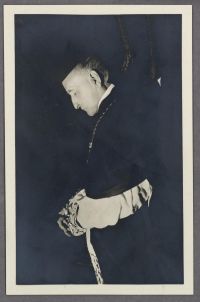 Francis Aidan Gasquet,
The Eve of the Reformation
Francis Aidan Gasquet,
The Eve of the Reformation
“ Those who had no money to give brought articles of jewellery, such as rings, brooches, buckles, and the like, or articles of dress or of domestic utility, to be converted into vestments, banners, and altar hangings to adorn the images and shrines, to make the sacred vessels of God’s house, or to be sold for like purposes. ”
“ Even when enamels cover the various parts of jewels in a wondrous harmony of colour, the artists of the period contrived with extraordinary tact to leave small portions in gold: the hair of the figures, manes of horses, armour, weapons—glittering points that enhance the beauty of the whole. ”
Samuel Allen, Allen's West London Street Directory…
“ G. K. Bird solicits an inspection of his well selected Stock of Jewellery, consisting of Bracelets, Brooches, Albert and Guard Chains, Crosses, Earrings, Lockets, Necklets, Gold and Silver Pencils, Scarf Pins, Wedding, Keeper, Gem and other Rings, Studs, Sleeve Links, &c., &c., all of the newest patterns. ”
“ The fact that all classes during the struggle parted with their valuables to assist their respective champions has rendered jewellery extremely rare. Women, and even little children, voluntarily sent their necklaces and brooches "for the King" ”
“ The jewel worn as a personal ornament may be merely decorative, such as the aigrette or the pendant, or it may be useful as well as ornamental, such as the brooch or the girdle. Gems and precious stones are not jewels, in the present sense, until the jeweller's skill has wrought and set them. This definition will be found to correspond with the term minuteria adopted by Italian writers on the goldsmith's art for objects in precious materials employed for the adornment of the person, as distinct from grosseria—those fashioned for household use or ornament. ”
“ These fine compositions, when formed of precious stones, show knots and interlacings for clasps, pendants, and earrings, in which diamonds are fully displayed in rose-cut forms. As models for objects not composed entirely of stones, we find seals, rings, bracelets and chains decorated with ribbons and bows mingled with monograms, and emblems, such as death's-heads. Together with these appear tasteful arrangements for enamel-work in the form of natural flowers of great charm and delicacy. ”
“ For there are tribes to whom climate and civilisation have not yet suggested the necessity of clothing the body, but who nevertheless possess ornaments of some degree of development. From the rudest of beginnings up to the last refinements of art, jewelled ornaments have ever the same purpose in view—to give prominence to individual parts of the body by means of glittering, beautiful objects which involuntarily draw the eye of the spectator in the desired direction. ”
“ Of greater importance, however, than the information to be gleaned from pictorial and literary sources is that derived from the actual jewels themselves, a considerable number of which, through all the changes and chances of more than three centuries, have been handed down still practically intact, and retaining the chief feature of their decoration—their exquisite enamel. ”
“ We may state, in general, that jewels figured in portraits are to be relied upon as being the actual objects possessed by the persons represented. All the early painters displayed, as has been said, a special love for jewel forms. They not only took their beautiful models as they found them, but being themselves mostly masters of the jeweller's craft, they devoted much attention to the adornment and the arrangement of the jewels of their models. ”
“ The goddess Fashion, who throughout all ages has waged war on the productions of the goldsmith, has laid a heavier hand on these than on any other forms of personal ornament—a circumstance which accounts for the survival at the present day of a comparatively small proportion of the enormous quantity of objects of this description that must formerly have been produced. ”
“ With the exception of many finger rings worn by both sexes and some female ornaments, the greater number of jewels discovered in the tombs are of inferior quality and value to those which the deceased had worn when living. ”
“ Men's necklaces, apart from the chains and collars of distinction belonging to particular orders or guilds, seem to have been mostly of pure gold, and in the {237} reign of Henry VIII the fashion of wearing them was carried to a most unreasonable excess. ”
“ Whatsoever the devise may be, and what success they may have in their dancing, yet you should be sure to have seen great riches in jewels, when one lady, and that under a baroness, is said to be furnished for better than a hundred thousand pounds ”
“ The spaces between the stones are filled with chased or enamelled arrangements of scroll or leaf work.The smaller jewels, which might also have been worn as enseignes or badges on the hat, or as brooches, are of open goldwork with leaf or ribbon ornament set with stones and pearls. They include a very beautiful design of a half-length figure of a lady in the costume of the {213} period holding between her hands a large stone, upon which is the inscription well laydi well (Pl. XXVI, 9) . ”
“ The rarity of jewels for actual use may be further explained by the fact that articles of that kind would only be associated with the grave of a person of wealth and distinction, and that the more important graves were the first prey of robbers. ”
“ Soe longe as the conscience of my heires shall have grace and honestie to perform my will, for that I esteeme them right jeweles, and monumentes worthie to be kept for theire beautie, rareness, and that for monie they are not to be matched, nor the like yet knowen to be founde in this realme. ”
“ From Kreuterbuch (Frankfort, 1536) . In Henry VIII's inventory of 1527 we find: "Upon a finger-stall, seven rings, one a ruby, another an emerald, and a turquoise, another a table diamond, another a triangular diamond, another a rocky diamond"; also in 1530: "A roll with thirty-nine Paris rings, with small stones." In the Duke of Newcastle's comedy The Country Captain (1649) mention is made of an extravagant person "who makes his fingers like jewellers' cards to set rings upon." ”
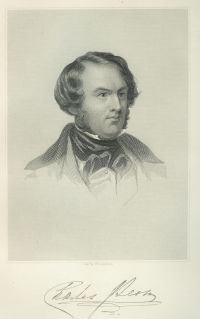 Charles James Lever,
Diary And Notes Of Horace Templeton…
Charles James Lever,
Diary And Notes Of Horace Templeton…
“ A little further on you may meet with a jeweller’s, where ornaments the most rare and costly are to be found: massive old necklaces of amethyst or emerald, in which the ungainly setting bears such a contrast to the value of the stone—rich clasps of pink topaz or ruby, for the collar of a cloak—sword-handles all paved with precious gems—and signet-rings, that have circled the fingers of proud Counts of the Empire, and, mayhap, sealed with their impress many a dark and gloomy record. ”
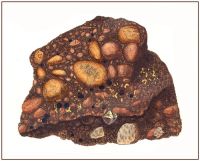 John Mawe,
A Treatise on Diamonds, and Precious Stones
(1823)
John Mawe,
A Treatise on Diamonds, and Precious Stones
(1823)
“ He then commences the operations belonging to his department or art; which is to arrange, display, and set the gems so as to produce the best effect, and present the most striking and captivating appearance, according to the nature of the ornament required: whether it be an elegant groupe, richly combined, a necklace, an ear-drop, a ring, or a pin. The setting should be as little shewn as possible, for it is by concealing his art that the jeweller displays the gem to the greatest advantage. ”
 Marjorie Bowen,
Prince and Heretic
Marjorie Bowen,
Prince and Heretic
“ Crystal goblets, candlesticks, pattens, lamps, chains, reliquaries of fine gold; ewers, caskets, rings and staffs set with pearl, with sapphire, with ruby and emerald; vases and dishes of glowing enamel; statues and images in ivory and silver; rosaries in rare gems; lace vestures worth as much as gold; stoles, gloves, and staffs all of incomparable workmanship and all sparkling with jewels; books with gold covers ”
George Francis White, Views in India, chiefly among the Himalaya Mountains (1838)
“ The women wore silver and gold ornaments across the forehead, rich and fantastical, but not particularly becoming; and those who were wealthy enough, loaded themselves with a great variety of tasteless incumbrances—chains and bells of precious metals, a profusion of ear-rings, and silver fringes pendent over the eyes, while their bracelets, necklaces, amulets, nose rings, finger rings, and clasps of various kinds of coloured stones, were innumerable. ”
