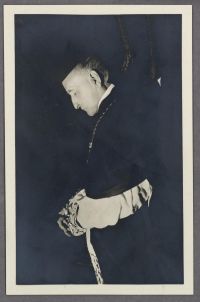
Francis Aidan Gasquet

Francis Aidan Gasquet

Summary

Portrait of Francis Aidan Gasquet Francis Aidan Gasquet The Eve of the Reformation

Why not as a Christian to a Christian? Why do these frivolous things have greater weight than such natural ties, such bonds of Christ? Places separate bodies, not souls. In old days the Rhine divided a Frenchman from a German, but the Rhine cannot divide one Christian from another. The Pyrenees cut off Spain from France, but these mountains do not destroy the communion of the Church. The sea divides the English and French peoples, but it cannot cut off the society of religion....” The world is the fatherland of all people; all men are sprung from a common stock.
Source: Gutenberg

Portrait of Francis Aidan Gasquet Francis Aidan Gasquet The Eve of the Reformation

Von Hutten wants me, says Erasmus, to come to them. “To whom? To those who are good and actuated by the true Gospel teaching? I would willingly fly to them if any one will point them out. If he knew of any Lutherans, who in place of wine, prostitutes, and dice, have at any time delighted in holy reading and conversation; of any who never cheat or neglect to pay their debts, but are ready to give to the needy; of any who look on injuries done to them as favours, who bless those who curse them—if he can show me such people, he may count on me as an associate.
Source: Gutenberg

Portrait of Francis Aidan Gasquet Francis Aidan Gasquet The Eve of the Reformation

Again and again in the sermons of the fifteenth century this truth, with all its practical applications, was enforced by the priest at the altar, where both poor and rich alike met on a common footing—“all, poor and rich, high and low, noble and simple, have sprung from a common stock and are children of a common father, Adam:” “God did not create a golden Adam from whom the nobles are descended, nor a silver Adam from whom have come the rich, and another, a clay Adam, from whom are the poor; but all, nobles, rich and poor, have one common father, made out of the dust of the earth.”
Source: Gutenberg

Get perspective with Kwize: daily news enlightened by great literature