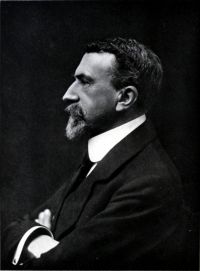
“ The amethyst was the jewel of memory, he told her, and you only had to hold it for a minute in your ear for all the nice things that had happened in the past to become the present. The moonstone was the bead of the future, and after you had rubbed it hard you could see reflected in it all that was going to happen, and so you could avoid any coming danger. The sapphire was the bead of purity, and when you were old you need only press it for an instant against your forehead to have all your years drop from you like the petals from a flower. ”
Amethyst
Definition and stakes
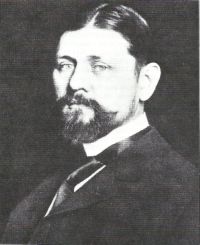
Amethyst, a violet form of quartz, takes its name from the Greek amethystos, meaning "not intoxicated," reflecting ancient beliefs in its ability to prevent drunkenness. This semiprecious stone, valued for its hue and durability, has played a significant role in cultural and scientific discussions. Authors such as Isidore Kozminsky emphasized its symbolic function as a safeguard against vice and a medium for spiritual insight, while John Mawe described its aesthetic and practical applications in jewelry, pointing out its range of shades.
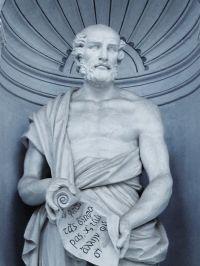
William Crookes examined its geological origins, connecting its color to trace elements such as manganese. Although once considered one of the primary gems, amethyst's worth declined with the discovery of large deposits in Brazil, yet it continues to be a mainstay in ornamentation and mineralogy, its appeal lasting through both legend and research.
Quotes about “amethyst”
 John Mawe,
A Treatise on Diamonds, and Precious Stones
(1823)
John Mawe,
A Treatise on Diamonds, and Precious Stones
(1823)
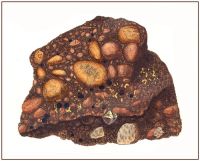
“ The color of the Amethyst, when perfect, resembles that of the violet or purple grape; but it not unfrequently happens, that the tinge is confined to one part of the stone only, while the other is left almost colorless. When it possesses a richness, clearness, and uniformity of hue, it is considered a gem of exquisite beauty; and as it occurs of considerable size, it is suited to all ornamental purposes. In specific gravity and hardness, it bears no comparison with the oriental amethyst; it is also inferior in beauty and lustre ”
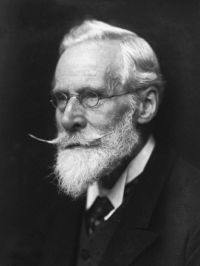 William Crookes,
1911 Encyclopædia Britannica
(1911)
William Crookes,
1911 Encyclopædia Britannica
(1911)
“ It is evident that if to the igneous bath of alumina some colouring matter, such as manganese, is added capable of communicating a violet colour to the crystals of alumina, the Oriental amethyst will be the result. Oriental amethyst has been so formed artificially, but the stone being known only as a curiosity to mineralogists and experts in precious stones, and the public not being able to discriminate between the violet sapphire and amethystine quartz, there is no demand for the artificial stone. ”