Summary

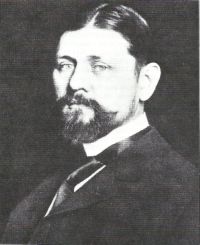
Portrait of George Frederick Kunz George Frederick Kunz The Curious Lore of Precious Stones

Its color is that of ice, and as the dewdrop or the drop of water from a mountain stream sparkles in the light of the sun, as the icicle sparkles in winter, and the stars on a cold winter night, so the diamond sparkles, and it combines and contrasts with all known gems. Like light, it illumines them just as the sun does the plants of the earth. The diamond, the gem of light, like light itself when broken into a spectrum, gives us all known colors, and by combining all these colors it gives us white.
Source: Gutenberg

Portrait of George Frederick Kunz George Frederick Kunz The Curious Lore of Precious Stones

Having decked herself with green of the various tints and colors, she has selected a background by which a contrast is made for the flowers that come in the spring and summer and ripen into fruit and seeds of autumn. To be a seasonable gem it must be rare, and the emerald is rare. Whether found in the mines of Bogotá, whether mined in ancient times at Zabarah in Egypt, or in the past century in the Ural Mountains, it has never been found in abundance. It is softer in color than the ruby and less hard in structure.
Source: Gutenberg

Portrait of George Frederick Kunz George Frederick Kunz The Curious Lore of Precious Stones

The year is divided into four seasons or cycles,—spring, summer, fall, and winter,—and each season has its particular gem The emerald is the gem of the spring, the ruby the gem of summer, the sapphire the gem of autumn, and the diamond the gem of winter
324
For spring, no precious stone is more appropriate than the emerald. Its beautiful color is that of Nature, for Nature clothes herself with green when she awakens from her long rest of winter.
Source: Gutenberg

Get perspective with Kwize: daily news enlightened by great literature