Summary

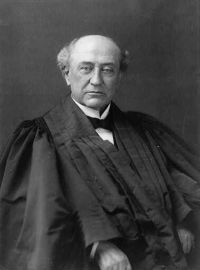
Portrait of David Josiah Brewer David Josiah Brewer Minnesota v. Hitchcock — Opinion of the Court

But the silence of counsel does not waive the question, nor would the express consent of the parties give to this court a jurisdiction which was not warranted by the Constitution and laws. It is the duty of every court of its own motion to inquire into the matter, irrespective of the wishes of the parties, and be careful that it exercises no powers save those conferred by law. Consent may waive an objection so far as respects the person, but it cannot invest a court with a jurisdiction which it does not by law possess over the subject-matter.
Source: Wikisource

Portrait of David Josiah Brewer David Josiah Brewer Minnesota v. Hitchcock — Opinion of the Court

And to what tribunal could a trust so momentous be more appropriately committed than to that which the people of the United States, in order to form a more perfect Union, establish justice, and insure domestic tranquillity, have constituted with authority to speak for all the people and all the states, upon questions before it to which the judicial power of the nation extends?
Source: Wikisource

Portrait of David Josiah Brewer David Josiah Brewer Minnesota v. Hitchcock — Opinion of the Court

Of course, when the Indian tribe has been removed by treaty from one body of land to another the interest of the tribe in the land from which it has been removed ceases, and the full obligation of the government to the Indians is satisfied when the pecuniary or real-estate consideration for the cession is secured to them. But in some instances, and this is one of them, the Indians have not been removed from one reservation to another, but the government has proceeded upon the theory that the time has come when efforts shall be made to civilize and fit them for citizenship.
Source: Wikisource

Get perspective with Kwize: daily news enlightened by great literature