Summary

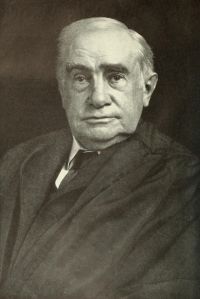
Portrait of Henry Billings Brown Henry Billings Brown Atlantic Company v. Mingus — Opinion of the Court

That it required the United States absolutely and at all hazards to extinguish such titles, and to take from the Indians a strip of land 40 miles in width through the entire territory, and open it to settlement, is not only inconsistent with their treaties and with their agreement with the company, but one which involved a grave disturbance, if not practically the upsetting, of a long-established Indian government.
Source: Wikisource

Portrait of Henry Billings Brown Henry Billings Brown Atlantic Company v. Mingus — Opinion of the Court

Be that as it may, the propriety or justice of their action towards the Indians with respect to their lands is a question of governmental policy, and is not a matter open to discussion in controversy between third parties, neither of whom derives title from the Indians.'
The railroad company was in no position to insist that the government should extinguish these titles, at least without affirmatively proving that the Indians were willing to make the cession, and that it was consistent with public policy and their own general welfare to permit them to do so.
Source: Wikisource

Portrait of Henry Billings Brown Henry Billings Brown Atlantic Company v. Mingus — Opinion of the Court

It would seem highly inequitable, however, that, if the government were compelled to go on and complete the road at its own expense, the company should yet be able to retain the land grant, the condition of which was the completion of the road at its expense. The act makes no provision whatever for the disposition of the land grant in this contingency. What remedy the government would have had in case it had elected itself to go on and complete the road is left entirely to conjecture.
Source: Wikisource

Get perspective with Kwize: daily news enlightened by great literature