Summary

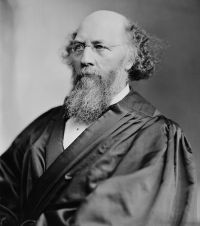
Portrait of Stephen Johnson Field Stephen Johnson Field Maynard v. Hill — Opinion of the Court

At common law, marriage as a status had few elements of contract about it. For instance, no other contract merged the legal existence of the parties into one. Other distinctive elements will readily suggest themselves, which rob it of most of its characteristics as a contract, and leave it simply as a status or institution. As such, it is not so much the result of private agreement as of public ordination. In every enlightened government it is pre-eminently the basis of civil institutions, and thus an object of the deepest public concern. In this light, marriage is more than a contract.
Source: Wikisource

Portrait of Stephen Johnson Field Stephen Johnson Field Maynard v. Hill — Opinion of the Court

The power is not prohibited either by the constitution of the United States or by that of the state. In view of the appalling consequences of declaring the general law of the state or the repeated acts of our legislature unconstitutional and void,-consequences easily conceived but not easily expressed, such as bastradizing the issue and subjecting the parties to punishment for adultery,-the court chould come to the result only on a solemn conviction that their oaths of office and these constitutions imperiously demand it.
Source: Wikisource

Portrait of Stephen Johnson Field Stephen Johnson Field Maynard v. Hill — Opinion of the Court

Marriage, as creating the most important relation in life, as having more to do with the morals and civilization of a people than any other institution, has always been subject to the control of the legislature. That body prescribes the age at which parties may contract to marry, the procedure or form essential to constitute marriage, the duties and obligations it creates, its effects upon the property rights of both, present and prospective, and the acts which may constitute grounds for its dissolution.
Source: Wikisource

Get perspective with Kwize: daily news enlightened by great literature