Summary

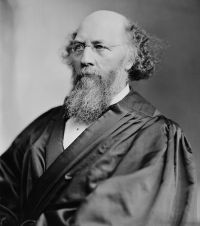
Portrait of Stephen Johnson Field Stephen Johnson Field Hornsby v. United States — Opinion of the Court

According to the regulations of 1828, the authority to make grants of land in California was lodged solely with the governor. It was not shared by him with the assembly. That body only possessed the power to approve or disapprove of grants made by him. Until such approval the estate granted was subject to be defeated. With such approval the grant became, as it was termed in the regulations, 'definitively valid,' that is, it ceased to be defeasible, and the estate was no longer liable to be divested, except by proceedings for breach of its other conditions.
Source: Wikisource

Portrait of Stephen Johnson Field Stephen Johnson Field Hornsby v. United States — Opinion of the Court

There having been no forfeiture of the grantees' interest in the present case, nor any such disregard of the conditions annexed to their grant as to have justified a forfeiture, the claimants under the grant are entitled to a confirmation. The interest which passed by the grant, whether it be regarded as a legal title, imperfect in its character, and to be perfected by a subsequent official survey and segregation of the quantity designated, or as a mere equitable or inchoate title, constituted property which the United States were bound to protect by the stipulations of the treaty of cession.
Source: Wikisource

Portrait of Stephen Johnson Field Stephen Johnson Field Hornsby v. United States — Opinion of the Court

It is also true that the regulations provided that the governor, upon receiving a petition for land, should proceed to obtain the necessary information as to the qualifications of the petitioner and the character of the land. But they did not prescribe any particular mode by which this information should be acquired. It might have been obtained by the governor from his own investigations, or he might, as stated in the regulations, if that course were preferred, consult the appropriate municipal authority, which was that of the district, whether any objection existed to making the grant.
Source: Wikisource

Get perspective with Kwize: daily news enlightened by great literature