Summary

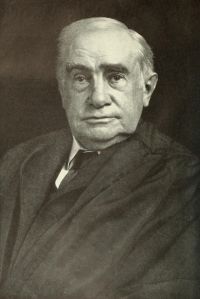
Portrait of Henry Billings Brown Henry Billings Brown Hays v. United States — Opinion of the Court

Upon the whole, we think it extremely improbable that, if a grant had been made by the governor, no reference whatever should have been made to it by the alcalde, who, upon the theory of the petitioner, was acting merely as the right hand of the governor in putting Trujillo into possession. The document is not in the usual form of a return to an order of a governor to put a grantee into juridical possession of the land, of which the reports and records of this court show many examples, but of an attempt by an alcalde to make a grant himself upon the petition of an applicant.
Source: Wikisource

Portrait of Henry Billings Brown Henry Billings Brown Hays v. United States — Opinion of the Court

Nor does such presumption arise if the surrounding circumstances are incompatible with the existence of a grant. In the case under consideration we cannot find any evidence which justifies us in believing that a legal grant can have been made, and under those circumstances we cannot consider possession since the date of the treaty as dispensing with the requirement that the title, if not perfect at that time, was one which the claimant would have had a lawful right to make perfect, had the territory not been acquired by the United States.
Source: Wikisource

Portrait of Henry Billings Brown Henry Billings Brown Hays v. United States — Opinion of the Court

Francisco Trujillo also testified that his father, who was Ventura Trujillo, had brought a very rich woman from the Comanches, and after that, the Mexican government made this grant to his father, and that there was an order signed by the government (governor) with a man to go and deliver the land to his father. That he knows the order was signed by Governor Armijo, and declared (directed) Damasio Salazar to go and deliver the land.
Source: Wikisource

Get perspective with Kwize: daily news enlightened by great literature