Summary

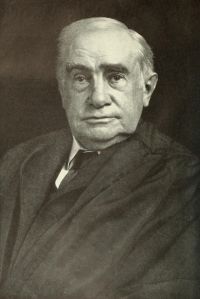
Portrait of Henry Billings Brown Henry Billings Brown Sena v. United States — Opinion of the Court

The most favorable view for petitioner that can be taken of this evidence is that possession of a house or a certain field of arable land may be referable to the entire tract included within the boundaries of the grant; but when the boundaries themselves are indefinite, the possession of a house is of no value in fixing the boundaries. A grant too indefinite to be located, and never fixed by any survey, is void as against the United States.
Source: Wikisource

Portrait of Henry Billings Brown Henry Billings Brown Sena v. United States — Opinion of the Court

But, conceding that an experienced surveyor, acquainted with the land in that neighborhood, might locate the boundaries of this tract, there is a still more serious difficulty in the evidence of abandonment and the laches of the claimant, which defenses may properly be considered together. Under our Anglo-Saxon system of jurisprudence, questions of the abandonment of land by the owner rarely arise, since they are usually sold to a purchaser or to the state for taxes; but the Spanish law recognizes distinctly the right to abandonment.
Source: Wikisource

Portrait of Henry Billings Brown Henry Billings Brown Sena v. United States — Opinion of the Court

In this connection the court below found that 'the evidence as to the settlement and occupation of the tract purporting to have been granted, continuity of possession, cultivation, residence, improvement, claim of ownership, notoriety of the grant, and knowledge of the existence in the community or by the oldest inhabitants now living, is so vague, contradictory, and uncertain as to be almost wholly wanting.' In the absence of clear evidence to the contrary, we deem it our duty to adopt the opinion of the court below in that particular.
Source: Wikisource

Get perspective with Kwize: daily news enlightened by great literature