Summary

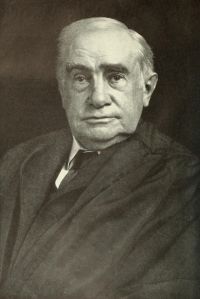
Portrait of Henry Billings Brown Henry Billings Brown Wiggins Ferry Company v. Ohio M Railway Company…

The railway company was not the formal assignee of the interest of the railroad company in such a contract, nor could it become so under the eighth clause of the contract without the consent of the ferry company. It is a well-established principle that the mere purchase of a railway under a foreclosure sale by a new corporation does not of itself make such new corporation liable for the obligations of the old one.
Source: Wikisource

Portrait of Henry Billings Brown Henry Billings Brown Wiggins Ferry Company v. Ohio M Railway Company…

A mistaken view of one's rights or remedies should not be permitted wholly to defeat a claim founded upon principles of equity and justice, and if the pleadings can be so amended as to admit proof of such claim, and such amendment does not introduce a new cause of action, though it may set up a new measure of damages, or work a real hardship to the party defendant, it is within the discretion even of the appellate court to permit such amendment to be made.
Source: Wikisource

Portrait of Henry Billings Brown Henry Billings Brown Wiggins Ferry Company v. Ohio M Railway Company…

It is not necessary that a party should deliberately agree to be bound by the terms of a contract to which he is a stranger, if, having knowledge of such contract, he deliberately enters into relations with one of the parties, which are only consistent with the adoption of such contract. If a person conduct himself in such manner as to lead the other party to believe that he has made a contract his own, and his acts are only explicable upon that theory, he will not be permitted afterwards to repudiate any of its obligations.
Source: Wikisource

Get perspective with Kwize: daily news enlightened by great literature