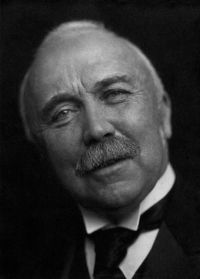
Henry Campbell-Bannerman

Henry Campbell-Bannerman

Summary

Portrait of Henry Campbell-Bannerman Henry Campbell-Bannerman The Duma is Dead, Long Live the Duma (1906)

But, gentlemen, can any of us say that as a result of such overwhelming sacrifices of money, of men, of ideals, and of civil dignity the sense of security has indeed been attained? Is it not evident that a process of simultaneous and progressive arming defeats its own purpose? Scare answers to scare, and force begets force, until at length it comes to be seen that we are racing one against another after a phantom security which continually vanishes as we approach.
Source: Wikisource

Portrait of Henry Campbell-Bannerman Henry Campbell-Bannerman The Duma is Dead, Long Live the Duma (1906)

Hay that war is the most futile and ferocious of human follies, what are we to say of the surpassing futility of expending the strength and substance of nations on preparations for war, possessing no finality, amenable to no alliances that statesmanship can devise, and for ever consuming the reserves on which a State must ultimately rely when the time of trial comes, if come it must—I mean the well-being and vitality of its people?
Source: Wikisource

Portrait of Henry Campbell-Bannerman Henry Campbell-Bannerman The Duma is Dead, Long Live the Duma (1906)

Such change as there has been is for the worse. Judging by the budgets of the great naval and military Powers, we might be living in a world where resort to force was the only known method of settling our differences, and the words “arbitration” and “conciliation” were devoid of meaning.
On the one hand we find the reasoned opinion of Europe declaring itself more and more strongly for peace, and, on the other hand, preparations for war which in their extent and effectiveness suggest that a lust for blood is the actuating principle of modern society.
Source: Wikisource

Get perspective with Kwize: daily news enlightened by great literature