Summary

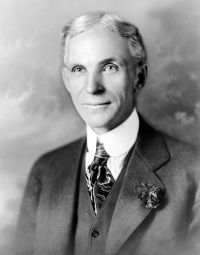
Portrait of Henry Ford Henry Ford The International Jew: The World's Foremost Problem… (1920)

Baruch pointed out, virtually pointed out to the Provost Marshal of the United States, the classes of men to be taken into the army. “We had to decide virtually the necessity of such things,” he said. “We decided that the less-essential industries would have to be curbed, and it was from them that man power would have to be taken for the army.” In this way he ruled chauffeurs, traveling salesmen, and similar classes into military service. It was, of course, necessary that some such ruling be made, but why one man, why always this one man?
Source: Wikisource

Portrait of Henry Ford Henry Ford The International Jew: The World's Foremost Problem… (1920)

The matter of wages came first—it entered into Mr. Baruch’s computation of the cost, on which, to a certain extent, he based the price. Then, having decided what the producer was to receive in wages, he decided next what the producer should pay for living. The producer himself may answer the question as to how it all turned out! Wages were “high,” but not quite so high as “living”; and the answer to both is in the testimony of Barney Baruch.
Source: Wikisource

Portrait of Henry Ford Henry Ford The International Jew: The World's Foremost Problem… (1920)

It is impossible to escape the names of Jews all down the line in these most important departments. But, for the present, attention is called to the scope of Mr. Baruch’s control in the country at large. It is best stated in his own words:
“No building costing more than $2,500 could be erected in the United States without approval of the War Industries Board. Nobody could get a barrel of cement without its approval. You could not get a piece of zinc for your kitchen table without the approval of the War Industries Board.”
3. Authority over industries.
Source: Wikisource

Get perspective with Kwize: daily news enlightened by great literature