Summary

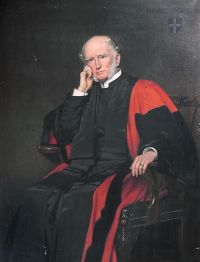
Portrait of Henry Wace Henry Wace Dictionary of Christian Biography and Literature (1911)

The main subject of the Apology, which, in the legend, is supposed to be addressed by Barlaam to Josaphat, is that the Christians alone possess the true knowledge of God. The emperor is invited to consider the conceptions of God among the various races of mankind, Barbarians and Greeks, Jews and Christians; it is then shewn how the Christians express their belief in their lives, and an attractive sketch of Christian life is given.
Source: Wikisource

Portrait of Henry Wace Henry Wace Dictionary of Christian Biography and Literature (1911)

Eustathian party at Antioch Paulinus, biographer of Ambrose Paulinus, bishop of Nola Paulinus of Pella Paulinus of Périgueux Paulinus, missionary to Northumbria Paulus of Samosata, patriarch of Antioch Paulus II, patriarch of Antioch Paulus, the Black Paulus of Asia Paulus I, bishop of Constantinople Paulus Edessenus Paulus, bishop of Emesa Paulus, St. called Thebaeus Paulus the Silentiary Pegasius, bp. of Troas Pelagia, surnamed Margarita Pelagianism and Pelagius Pelagius I., bishop of Rome Pelagius II., bishop of Rome Peregrinus, called Proteus Perpetua, Vibia Perpetuus, St., archbp.
Source: Wikisource

Portrait of Henry Wace Henry Wace Dictionary of Christian Biography and Literature (1911)

Two other fragments exist in Armenian which are ascribed to Aristides, a homily on the cry of the Robber and the answer of the Crucified, and a passage from "a letter to all philosophers," but their genuineness is doubtful, and F. C. Conybeare, in the Guardian, 1894 (July 18) , has shewn that in the 5th and 7th cents. literary frauds were often connected with the name of Aristides and other names of old Christian literature.
Source: Wikisource

Get perspective with Kwize: daily news enlightened by great literature