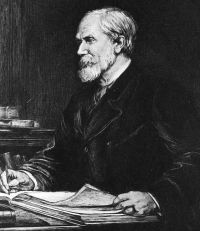
Henry Yule

Henry Yule

Summary

Portrait of Henry Yule Henry Yule,  Hobson-Jobson — Q (1903)

“ A city, port, and small kingdom on the west coast of the Malay Peninsula, tributary to Siam. The name according to Crawfurd is Malay kadáh, 'an elephant-trap' (see KEDDAH) . [Mr. Skeat writes: "I do not know what Crawfurd's authority may be, but kedah does not appear in Klinkert's Dict.... In any case the form taken by the name of the country is Kĕdah. The coralling of elephants is probably a Siamese custom, the method adopted on the E. coast, where the Malays are left to themselves, being to place a decoy female elephant near a powerful noose."] ”
Source: Wikisource

Portrait of Henry Yule Henry Yule,  Hobson-Jobson — Q (1903)

“ For ages Kaulam was known as one of the greatest ports of Indian trade with Western Asia, especially trade in pepper and brazil-wood. It was possibly the Malé of Cosmas in the 6th century (see MALABAR) , but the first mention of it by the present name is about three centuries later, in the Relation translated by Reinaud. The 'Kollam era' in general use in Malabar dates from A.D. 824; but it does not follow that the city had no earlier existence. ”
Source: Wikisource

Portrait of Henry Yule Henry Yule,  Hobson-Jobson — Q (1903)

“ The King of this city is a Pagan, and extremely powerful, and he has 20,000 horsemen, and many archers. This country has a good port near to the sea-coast. No grain grows here, but fruits as at Calicut, and pepper in great quantities."—Varthema, 182-3.
1516.—"Further on along the same coast towards the south is a great city and good sea-port which is named Coulam, in which dwell many Moors and Gentiles and Christians. They are great merchants and very rich, and own many ships with which they trade to Cholmendel, the Island of Ceylon, Bengal, Malaca, Samatara, and Pegu....
”
Source: Wikisource

Get perspective with Kwize: daily news enlightened by great literature