Summary

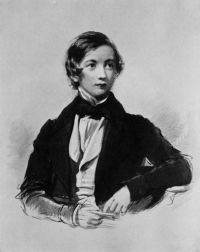
Portrait of Herbert Coleridge Herbert Coleridge A Dictionary of the First or Oldest Words in the English Language

Obsolete words are of course entered as they are spelt in the passage whence they are taken, a rule which applies as much to different forms of the same word, as to different words. As to the etymological matter, nothing further as a general rule has been attempted than to indicate the nearest cognate, or cognates, of the particular word; but it has not been thought necessary, or desirable, to load the Glossary with illustrations of this nature in very simple cases. I have to thank Hensleigh Wedgwood, Esq., for many kind and valuable suggestions in this part of my work.
Source: Gutenberg

Portrait of Herbert Coleridge Herbert Coleridge A Dictionary of the First or Oldest Words in the English Language

As, however, a mere index verborum would but inadequately fulfil its object, a certain amount of explanatory and etymological matter has been added, which it is hoped may render the work more generally interesting and useful than could otherwise have been the case. It is only proper to add that English literature, as distinguished from Semi-Saxon, is assumed to commence about the middle of the 13th century.
Source: Gutenberg

Portrait of Herbert Coleridge Herbert Coleridge A Dictionary of the First or Oldest Words in the English Language

Alys. 2484; ‘into randon.’ Cok. 130. AS. randún. Probably from the ON. rönd. Germ. rant, the border or edge of a thing. In Provençal we have the phrase ‘a randa,’ on the edge or border, hence close or pressing. From this comes the Fr. verb, ‘randir,’ to approach, rush towards a thing, and ‘randon,’ lit. rushing, and generally ‘haste, violence.’ See Burguy’s Grammaire, vol. ii.
Source: Gutenberg

Get perspective with Kwize: daily news enlightened by great literature