Summary

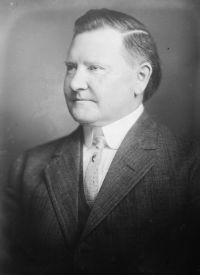
Portrait of Herbert John Webber Herbert John Webber Some facts concerning the New York State College of Agriculture at Cornell University… (1915)

The soil survey, by determining the character of soils and their relation to crops and management on the one hand, outlines the problems confronting the farmer, and, on the other hand, presents them to the Experiment Stations for their solution in a manner which makes for most rapid progress. With the large number of farms which are offered for sale or exchange in New York State, the soil survey is the only reliable and thorough method by which the true values of such farms may be compared and studied.
Source: Wikisource

Portrait of Herbert John Webber Herbert John Webber Some facts concerning the New York State College of Agriculture at Cornell University… (1915)

The surveys have shown a striking relationship between the size of farms and profits. Contrary to the old impression that a "little farm well tilled" yielded the greatest profits, the surveys have proved conclusively that for general farming in the regions surveyed the largest farms are paying best. They have also shown that in spite of the high wages demanded for labor, the most successful farmers hire the most help. A study of the most successful farms upsets the old teaching that dairy farmers should raise their own grain and that they cannot afford to raise their own stock.
Source: Wikisource

Portrait of Herbert John Webber Herbert John Webber Some facts concerning the New York State College of Agriculture at Cornell University… (1915)

No expensive animals have ever been purchased, and practically all of the present members of the herd have been raised upon the place. If all of the farmers in the State for the past thirty-five years had practiced these same methods, the annual yield of the average cow in the state of New York would easily be twice its present amount.
The cow-testing work of the Dairy Department has enabled the farmer to know the total amount of milk and butter-fat made by each cow in his herd and the value of feed consumed by each cow.
Source: Wikisource

Get perspective with Kwize: daily news enlightened by great literature