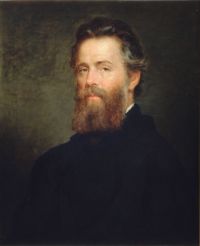
Herman Melville

Herman Melville

Summary

Portrait of Herman Melville Herman Melville,  White-Jacket — Chapter LXV (1850)

“ I say, White-Jacket, d'ye mind me? there never was a very great man yet who spent all his life inland. A snuff of the sea, my boy, is inspiration; and having been once out of sight of land, has been the making of many a true poet and the blasting of many pretenders; for, d'ye see, there's no gammon about the ocean; it knocks the false keel right off a pretender's bows; it tells him just what he is, and makes him feel it, too. A sailor's life, I say, is the thing to bring us mortals out. ”
Source: Wikisource

Portrait of Herman Melville Herman Melville,  White-Jacket — Chapter LXV (1850)

“ The land-breezes at Rio--by which alone vessels may emerge from the bay--is ever languid and faint. It comes from gardens of citrons and cloves, spiced with all the spices of the Tropic of Capricorn. And, like that old exquisite, Mohammed, who so much loved to snuff perfumes and essences, and used to lounge out of the conservatories of Khadija, his wife, to give battle to the robust sons of Koriesh; even so this Rio land-breeze comes jaded with sweet-smelling savours, to wrestle with the wild Tartar breezes of the sea. ”
Source: Wikisource

Portrait of Herman Melville Herman Melville,  White-Jacket — Chapter LXV (1850)

“ How many great men have been sailors, White-Jacket! They say Homer himself was once a tar, even as his hero, Ulysses, was both a sailor and a shipwright. I'll swear Shakspeare was once a captain of the forecastle. Do you mind the first scene in The Tempest, White-Jacket? And the world-finder, Christopher Columbus, was a sailor! and so was Camoens, who went to sea with Gama, else we had never had the Lusiad, White-Jacket. Yes, I've sailed over the very track that Camoens sailed--round the East Cape into the Indian Ocean. ”
Source: Wikisource

Get perspective with Kwize: daily news enlightened by great literature