Summary

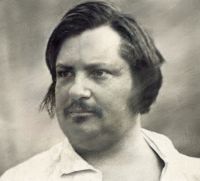
Portrait of Honoré de Balzac Honoré de Balzac Eugénie Grandet — Chapter XIV

Marriage is life, the veil is death."
"Yes, death,—a quick death!" she said, with dreadful eagerness.
"Death? but you have great obligations to fulfil to society, mademoiselle. Are you not the mother of the poor, to whom you give clothes and wood in winter and work in summer? Your great fortune is a loan which you must return, and you have sacredly accepted it as such. To bury yourself in a convent would be selfishness; to remain an old maid is to fail in duty. In the first place, can you manage your vast property alone?
Source: Wikisource

Portrait of Honoré de Balzac Honoré de Balzac Eugénie Grandet — Chapter XIV

The churches of Saumur owe much of their embellishment to her. Madame de Bonfons (sometimes ironically spoken of as mademoiselle) inspires for the most part reverential respect: and yet that noble heart, beating only with tenderest emotions, has been, from first to last, subjected to the calculations of human selfishness; money has cast its frigid influence upon that hallowed life and taught distrust of feelings to a woman who is all feeling.
Source: Wikisource

Portrait of Honoré de Balzac Honoré de Balzac Eugénie Grandet — Chapter XIV

Endowed with the delicate perception which a solitary soul acquires through constant meditation, through the exquisite clear-sightedness with which a mind aloof from life fastens on all that falls within its sphere, Eugenie, taught by suffering and by her later education to divine thought, knew well that the president desired her death that he might step into possession of their immense fortune, augmented by the property of his uncle the notary and his uncle the abbe, whom it had lately pleased God to call to himself.
Source: Wikisource

Get perspective with Kwize: daily news enlightened by great literature