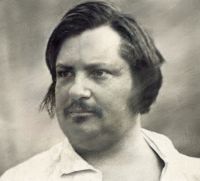
Honoré de Balzac

Honoré de Balzac

Summary

Portrait of Honoré de Balzac Honoré de Balzac Ursule Mirouët — Part II, Section 5 (1842)

Remorse is more than a thought, it springs from a feeling that is no more hidden than love, and that exercises the same tyranny. But, just as Minoret had not reflected in the least in seizing the fortune destined for Ursule, so he mechanically wished to drive her from Nemours when he felt himself injured by the sight of this deluded innocence.
Source: Wikisource

Portrait of Honoré de Balzac Honoré de Balzac Ursule Mirouët — Part II, Section 5 (1842)

He doubtless attributed this emotion to Ursule’s presence alone, fancying that, if once the young girl disappeared, these tiresome troubles would also vanish. In short, perhaps crime has its doctrine of perfection. A beginning of evil must have its end, a first wound calls for the blow that kills. It may be that theft leads inevitably to murder.
Source: Wikisource

Portrait of Honoré de Balzac Honoré de Balzac Ursule Mirouët — Part II, Section 5 (1842)

Sometimes the old man’s friend would exclaim, just as the men of business and the heirs were leaving: “I don’t understand it at all!” As, to many superficial people, two hundred thousand francs made a fine provincial fortune for each heir, nobody thought of asking how the doctor had been able to keep up his style of household with only fifteen thousand francs, since he had left untouched the interest on the Portenduère debt. Bongrand, Savinien and the curé alone took up this question in Ursule’s interest, and, by expressing it, made the postmaster turn pale more than once.
Source: Wikisource

Get perspective with Kwize: daily news enlightened by great literature