Summary

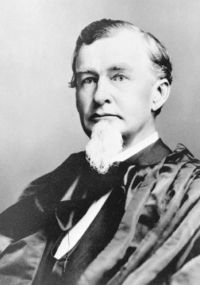
Portrait of Howell Edmunds Jackson Howell Edmunds Jackson Columbus Southern Railway Company v…

The question is all the more free from difficulty because under our system each taxpayer values his own property for taxation, and makes his own returns. So under the present law the railroad can and does make returns to the comptroller general, which serve the same purpose as if it made separate returns to the tax receivers. It fixes the amounts on which it must pay taxes, and each county fixes its own rate. Hence, under this law, a railroad would not have to pay more tax than if each county by its own officials attended to the whole business.
Source: Wikisource

Portrait of Howell Edmunds Jackson Howell Edmunds Jackson Columbus Southern Railway Company v…

It was there said by the supreme court of Tennessee. 'The property of a railroad company for purposes of taxation consists of its realty, its local personalty, its rolling stock, its choses in action, and its franchises. The franchise is the privilege conferred by the charter of incorporation, namely, the right to exercise all the powers granted in the mode prescribed for the purpose of profit. It is a unit, not confined to any one county in which it may be exercised.
Source: Wikisource

Portrait of Howell Edmunds Jackson Howell Edmunds Jackson Columbus Southern Railway Company v…

It merely provides a means for the county to apply to railroad property its own rate of taxation and collect the tax for county purposes. The vital thing is the rate, and the state has nothing to do with fixing it in any county beyond general regulations restricting its amount and the like. It is entirely immaterial whether mere ministerial acts and calculations, which, when correctly done and made, can have but one possible result, are the work of the comptroller general or of the county authorities.
Source: Wikisource

Get perspective with Kwize: daily news enlightened by great literature