Summary

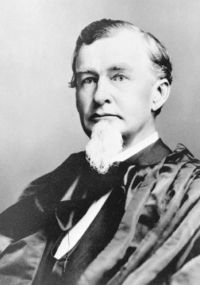
Portrait of Howell Edmunds Jackson Howell Edmunds Jackson Sturm v. Boker — Opinion of the Court

It is too clear for discussion, or the citation of authorities, that the contract was not a sale of the goods by the defendants to Sturm. The terms and conditions under which the goods were delivered to him import only a consignment. The words 'consign' and 'consigned,' employed in the letters, were used in their commercial sense, which meant that the property was committed or intrusted to Sturm for care or sale, and did not, by any express or fair implication, mean the sale by the one, or purchase by the other.
Source: Wikisource

Portrait of Howell Edmunds Jackson Howell Edmunds Jackson Sturm v. Boker — Opinion of the Court

The insured goods had to contribute to the general average the sum of $1,463.84, which was paid by the complainant, who also paid out the further sum of $672.78 for repairing part of the consigned goods, which reached Mexico in a damaged condition. Half of the amount paid on general average, and the amount paid for repairs upon the consigned goods, are the only items of account in controversy, so far as concerns the shipment made upon the Blonde, nothing having been recovered, either by complainant or defendants, upon the insurance policies taken out on the cargo which she carried.
Source: Wikisource

Portrait of Howell Edmunds Jackson Howell Edmunds Jackson Sturm v. Boker — Opinion of the Court

If, by the terms of the contract, as embodied in the letters of September 18 and October 24, 1867, the title to the goods vested in the complainant, or they were to be at his risk during their transit to Mexico, then it is conceded that upon an adjustment of the accounts between the parties on that basis, with the allowance to the defendants of a premium of 45 per cent. for gold, there is little or nothing due to the complainat, and no substantial error in the decree dismissing his bill.
Source: Wikisource

Get perspective with Kwize: daily news enlightened by great literature