Summary

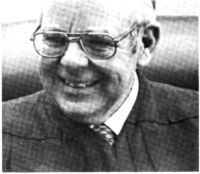
Portrait of Hugh H. Bownes Hugh H. Bownes Flynn v. Hubbard — Opinion of the Court

Although the court correctly, in my view, recognizes that intervention should not be granted, I do not accept its basis, i.e., the fact that the named defendant will not appear precludes a nonparty's right to intervene. To the contrary, that fact itself satisfies the rule's third requirement. Intervention is inappropriate because of appellants' failure to show that they have protectible interests that will be impaired by this litigation.
Source: Wikisource

Portrait of Hugh H. Bownes Hugh H. Bownes Flynn v. Hubbard — Opinion of the Court

Giving Cascade the broadest possible reading, we do not think it affords any basis for the proposition that if an individual has an interest in a case, as defined by the rule, he or she can intervene absent a defendant. The Court gave two reasons for allowing intervention, "an interest in the transaction" and the failure of the "existing parties" to represent the intervenor's interests. Here, Hubbard has not appeared to date; until or unless he does, it cannot be determined whether he will or can represent adequately the interests of the putative intervenors.
Source: Wikisource

Portrait of Hugh H. Bownes Hugh H. Bownes Flynn v. Hubbard — Opinion of the Court

A party who fails to appear for trial and thus receives a default judgment has failed to represent the interests of the would-be intervenor. Thus, if the union in Woolworth failed to appear before the district court to challenge the employer's motion for summary judgment, the interests of the discharged employees would be left inadequately represented. Where significantly protectible interests of a putative party may be adversely affected in a litigation and the sole defendant chooses not to appear, intervention is warranted.
Source: Wikisource

Get perspective with Kwize: daily news enlightened by great literature