Summary

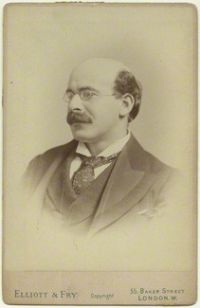
Portrait of Israel Gollancz Israel Gollancz 1911 Encyclopædia Britannica, Volume 21… (1911)

Pearl is a poet’s lament for the loss of a girl-child, “who lived not upon earth two years”—the poet is evidently the child’s father. In grief he visits the little grave, and there in a vision beholds his Pearl, now transfigured as a queen of heaven—he sees her beneath “a crystal rock,” beyond a stream; the dreamer would fain cross over, but cannot. From the opposite bank Pearl, grown in wisdom as in stature, instructs him in lessons of faith and resignation, expounds to him the mystery of her transfiguration, and leads him to a glimpse of the New Jerusalem.
Source: Wikisource

Portrait of Israel Gollancz Israel Gollancz 1911 Encyclopædia Britannica, Volume 21… (1911)

In Gawayne, probably the first of the four, the poet is still the minstrel rejoicing in the glamour of the Arthurian tale, but using it, in almost Spenserian spirit, to point a moral. In Pearl the minstrel has become the elegiac poet, harmonizing the old Teutonic form with the newer Romance rhyme. In Cleanness he has discarded all attractions of form, and writes, in direct alliterative metre, a stern homily on chastity. In Patience—a homiletic paraphrase of Jonah—he appears to be autobiographical, reminding himself, while teaching others, that “Poverty and Patience are needs playfellows.”
Source: Wikisource

Portrait of Israel Gollancz Israel Gollancz 1911 Encyclopædia Britannica, Volume 21… (1911)

From these two sources, the Book of Revelation, with its almost Celtic glamour, and The Romaunt of the Rose, with its almost Oriental allegory, are derived much of the wealth and brilliancy of the poem. The poet’s fancy revels in the richness of the heavenly and the earthly paradise, but his fancy is subordinated to his earnestness and intensity.”
The leading motifs of Pearl are to be found in the Gospel—in the allegory of the merchant who sold his all to purchase one pearl of great price, and in the words, so fraught with solace for the child-bereft, “for of such is the Kingdom of Heaven.”
Source: Wikisource

Get perspective with Kwize: daily news enlightened by great literature