Summary

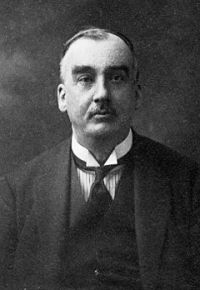
Portrait of J. Meade Falkner J. Meade Falkner,  Moonfleet — Chapter 14. The Well-house (1898)

“ Things that were settled, he said, should remain settled; he was not one for changes; it was a man's task this and no child's play; a boy would not have his senses about him, and might overlook the place. I fixed my eyes on Elzevir to let him know what I thought, and Master Turnkey's words fell lightly on his ears as water on a duck's back. Then this ill-eyed man tried to work upon my fears; saying that the well is deep and the bucket small, I shall get giddy and be overbalanced. ”
Source: Wikisource

Portrait of J. Meade Falkner J. Meade Falkner,  Moonfleet — Chapter 14. The Well-house (1898)

“ Yet there was one fear that still held me, for thinking of what I had heard of the quarry shafts in Purbeck, how men had gone down to explore, and there been taken with a sudden giddiness, and never lived to tell what they had seen; and so I said to Master Elzevir, 'Art sure the well is clean, and that no deadly gases lurk below?'
'Thou mayst be sure I knew the well was sweet before I let thee talk of going down,' he answered. 'For yesterday we lowered a candle to the water, and the flame burned bright and steady; and where the candle lives, there man lives too.
”
Source: Wikisource

Portrait of J. Meade Falkner J. Meade Falkner,  Moonfleet — Chapter 14. The Well-house (1898)

“ There is a slip of garden at the back of the Bugle, which runs down to a little stream, and one evening when I was taking the air there after dark, Elzevir returned and said the time was come for us to put Blackbeard's cipher to the proof.
'I have tried every way,' he said, 'to see if we could work this secretly; but 'tis not to be done without the privity of the man who keeps the well, and even with his help it is not easy. He is a man I do not trust, but have been forced to tell him there is treasure hidden in the well, yet without saying where it lies or how to get it.
”
Source: Wikisource

Get perspective with Kwize: daily news enlightened by great literature