Summary

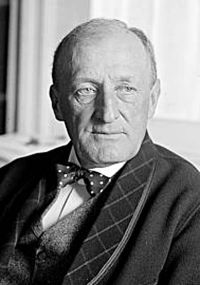
Portrait of James Clark McReynolds James Clark McReynolds Cooper v. United States — Opinion of the Court

Anderson, 276 U.S. 440, 48 S.C.t. 353, 72 L. Ed. 645, considered the validity of an enactment which laid a tax upon donors because of gifts fully consummated prior to its passage. We held this was beyond the power of Congress. None of these cases is in point; they gave no consideration to the power of Congress to require that taxable income should include profits from transactions consummated within the year.
Source: Wikisource

Portrait of James Clark McReynolds James Clark McReynolds Cooper v. United States — Opinion of the Court

We think the purpose of Congress to apply the provisions of section 202 (a) (2) to the transaction here involved is clear. Shwab v. Doyle grew out of the Revenue Act of September 8, 1916 (39 Stat. 758) . There, after considering the relevant circumstances, we declared there was no intention to give retroactive effect to the enactment. Here, the contrary design is not doubtful.
The power of Congress to tax as part of a donee's income the difference between what the gift cost the donor and the price received therefor when sold by the donee was affirmed in Taft v.
Source: Wikisource

Get perspective with Kwize: daily news enlightened by great literature