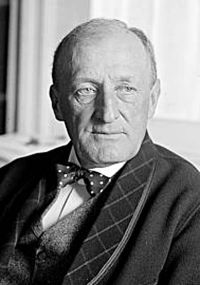
 James Clark McReynolds,
Lane v. Morrison — Opinion of the Court
James Clark McReynolds,
Lane v. Morrison — Opinion of the Court
“ It seems clear that 'civilization and self-support' among the Indians cannot be promoted effectively by disconnected efforts, but must be accomplished, if at all, by definite, permanent plans operating through many years. And in view of the long-continued practice of Congress to provide funds for such continuous efforts by annual appropriations, the circumstances under which the Joint Resolution became law, and the studied incorporation therein of the language of former appropriation acts, we think the purpose was to authorize expenditure of $160,000 during 1916, as had been done for 1915. ”
