Summary

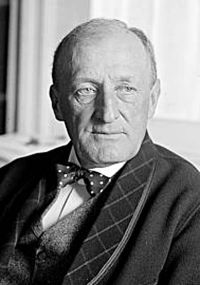
Portrait of James Clark McReynolds James Clark McReynolds McCarroll v. Dixie Greyhound Lines…

There are ways enough in which the state can take its lawful toll without any suppression of the commerce which it taxes. In laying an exaction as a means of collecting compensation for the use of its highways the state must tax the commerce as it is done, and not as it might be done if the state could control it. Appellant cannot justify an unlawful exaction by insisting that it would be lawful if the taxpayer were to relinquish some of the commerce which the Constitution protects from state interference.
Source: Wikisource

Portrait of James Clark McReynolds James Clark McReynolds McCarroll v. Dixie Greyhound Lines…

Congress alone can, in the exercise of its plenary constitutional control over interstate commerce, not only consider whether such a tax as now under scrutiny is consistent with the best interests of our national economy, but can also on the basis of full exploration of the many aspects of a complicated problem devise a national policy fair alike to the States and our Union.
Source: Wikisource

Portrait of James Clark McReynolds James Clark McReynolds McCarroll v. Dixie Greyhound Lines…

The very fact that such niceties of calculation have to be indulged in as the concurring opinion finds necessary in order to establish the mischief of the statute, makes manifest the 'real doubt' of any showing of unconstitutionality and indicates that a burden of calculation and speculation is assumed in the exercise of the judicial function which should be left to the legislatures of the States and the Congress.
Source: Wikisource

Get perspective with Kwize: daily news enlightened by great literature