Summary

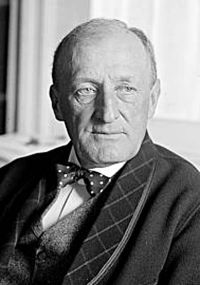
Portrait of James Clark McReynolds James Clark McReynolds McDougal v. McKay — Opinion of the Court

Relations of the half blood shall inherit equally with those of the whole blood in the same degree; and the descendants of such relatives shall inherit in the same manner as the descendants of the whole blood, unless the inheritance come to the intestate by descent, devise, or gift, of some one of his ancestors, in which case all those who are not of the blood of such ancestor shall be excluded from such inheritance.
Source: Wikisource

Portrait of James Clark McReynolds James Clark McReynolds McDougal v. McKay — Opinion of the Court

In cases where the intestate shall die without descendants, if the estate come by the father, then it shall ascend to the father and his heirs; if by the mother, the estate, or so much thereof as came by the mother, shall ascend to the mother and her heirs; but if the estate be a new acquisition it shall ascend to the father for his lifetime, and then descend, in remainder, to the collateral kindred of the intestate in the manner provided in this act
Source: Wikisource

Portrait of James Clark McReynolds James Clark McReynolds McDougal v. McKay — Opinion of the Court

They sharply distinguish between an estate which came to a decedent by a parent and a new acquisition, and prescribe different rules of inheritance.
In Shulthis v. McDougal, 95 C. C. A. 615, 170 Fed. 529, decided June 3, 1909, by the circuit court of appeals for the eighth circuit, title to another portion of the Andrew J. Berryhill allotment was involved and it became necessary to ascertain his heirs.
Source: Wikisource

Get perspective with Kwize: daily news enlightened by great literature